The Most Enchanting Castles in Belgium
Photo: Chatsam / Wikimedia Commons (CC BY-SA 3.0)Belgium is famous for its cities, its chocolate, and its beer, but slip out into the countryside and you'll find something the guidebooks undersell: castles, and lots of them. For such a small country, Belgium is astonishingly castle-dense, from moated brick fortresses guarding the flat Flemish polders to cliff-top keeps clinging to the wooded valleys of the Ardennes. Many of them look less like military strongholds and more like something drawn for a picture book.
Better still, most see only a trickle of visitors. You can have a genuine fairytale castle almost to yourself on a quiet weekday, wander its moated courtyards, and be back in Brussels or Bruges by evening. Here are the most enchanting castles in Belgium, and how to catch each one at its most magical.
1. Château de Vêves, Celles
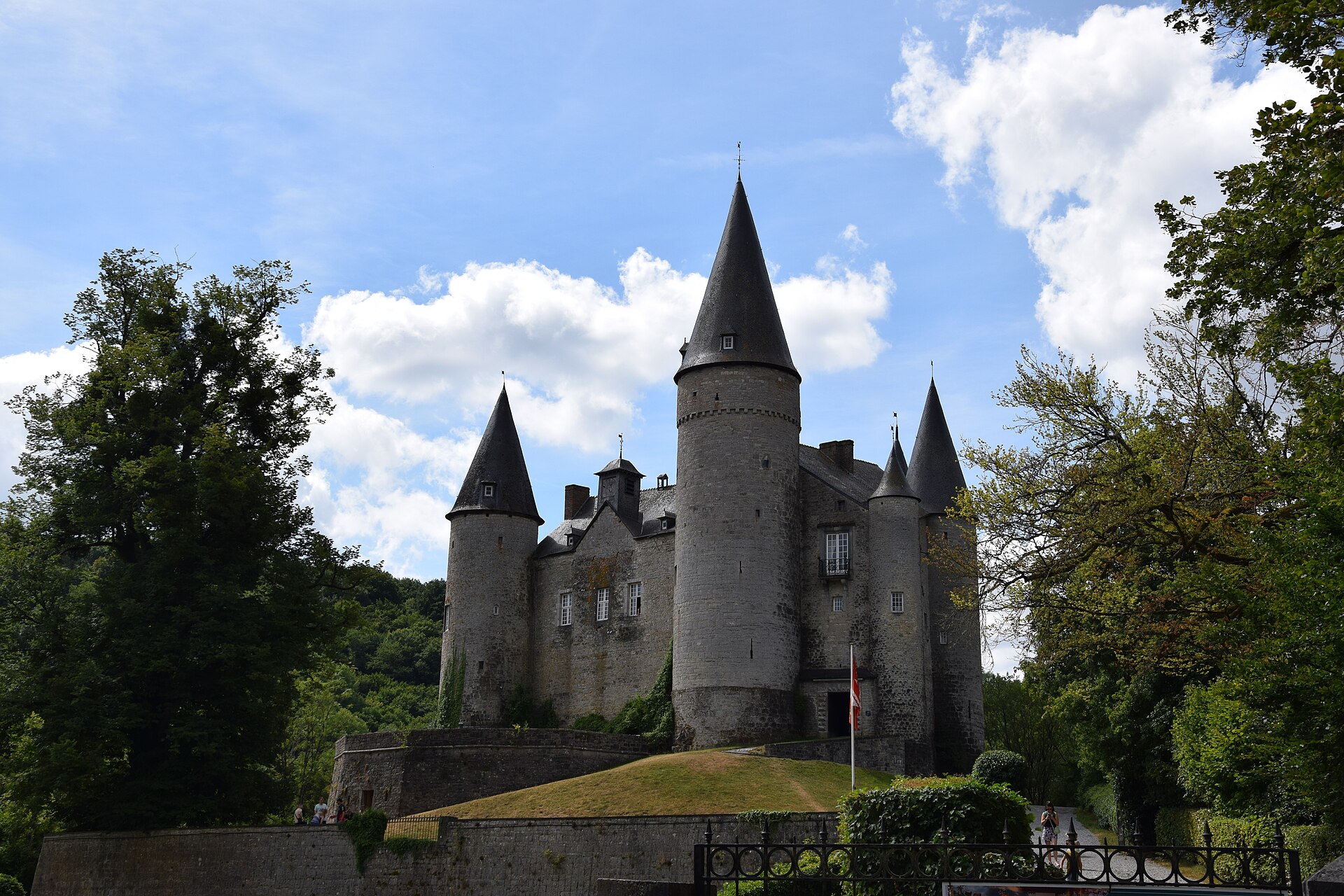
If Belgium has one castle straight out of a fairy tale, this is it. Perched on a rocky spur above the tiny village of Celles, near Dinant, Château de Vêves bristles with pointed towers, six of them, their conical slate roofs tapering into the sky like something from an illustrated storybook. There has been a stronghold here since the 8th century, but the graceful silhouette you see today dates largely from the 15th, rebuilt after the wars that repeatedly swept this borderland.
What makes Vêves so enchanting is how complete and how intimate it feels. Still owned by the same noble family after centuries, it reads as a lived-in home rather than a ruin, with furnished rooms, a pretty timbered inner courtyard, and costumed touches that lean happily into the fairy tale. Come on a quiet morning, approach from the valley so the towers rise above the trees, and pair it with a wander through storybook Celles and the nearby cliffs of Dinant.
2. Gravensteen, Ghent
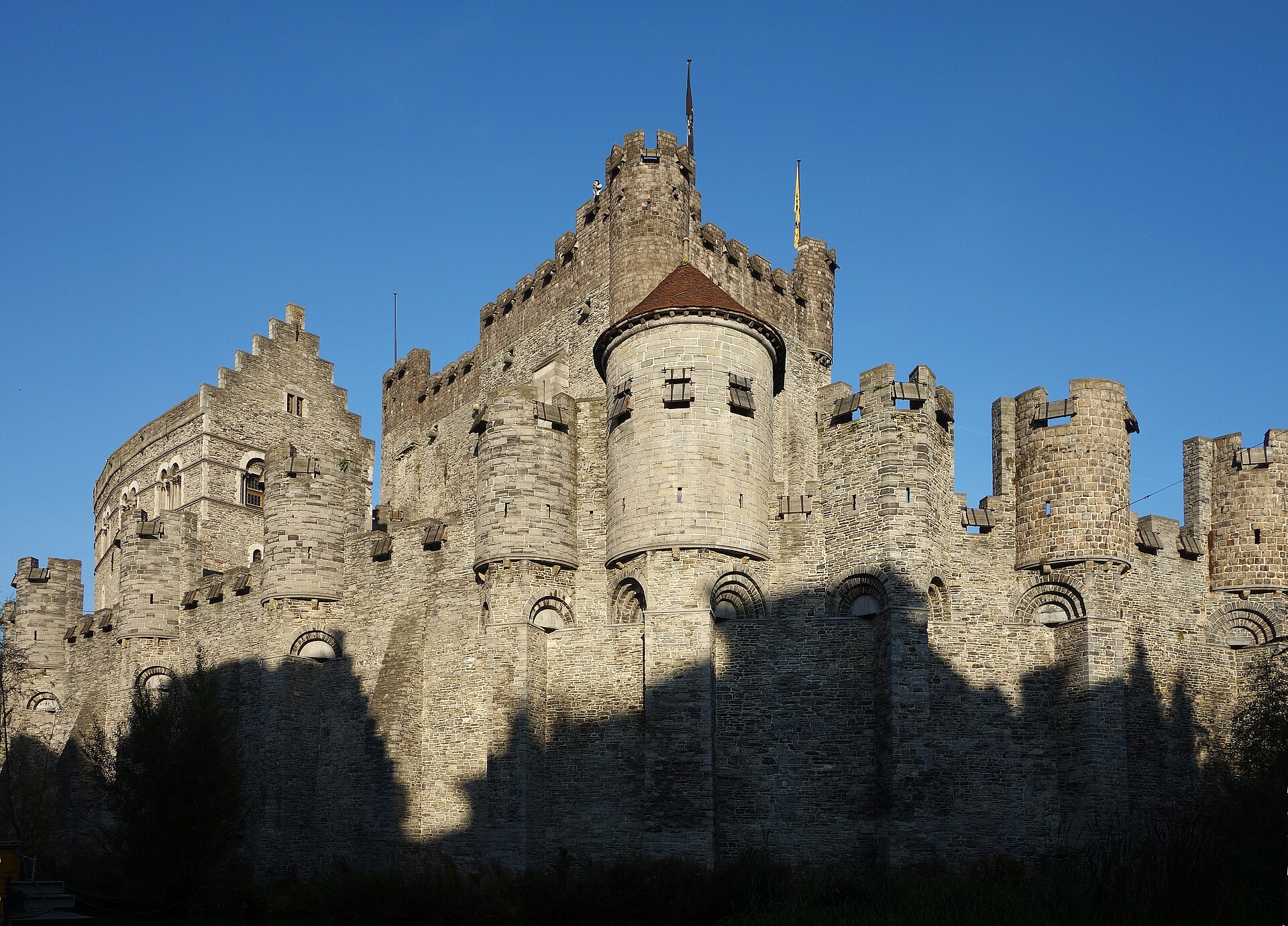
Most fairytale castles hide in the countryside. Gravensteen sits smack in the middle of a city, and is all the more startling for it. Its grey stone walls and crenellated keep rise straight out of a canal in the heart of Ghent, a proper medieval fortress marooned among cafés and cobbles. Built in 1180 by Count Philip of Alsace and modelled on the crusader castles of the Holy Land, the "Castle of the Counts" was designed to remind the city's restless burghers exactly who was in charge.
Today it's one of the best-preserved moated castles in Europe, and you can walk its ramparts for sweeping views over Ghent's rooftops and towers. It has a wonderfully lurid history too, having served as a mint, a courthouse, and a prison, complete with a small museum of medieval justice that is not for the squeamish. Because it's right in the centre, it slots perfectly into any day in Ghent, one of Belgium's most underrated cities.
3. Kasteel van Beersel, near Brussels
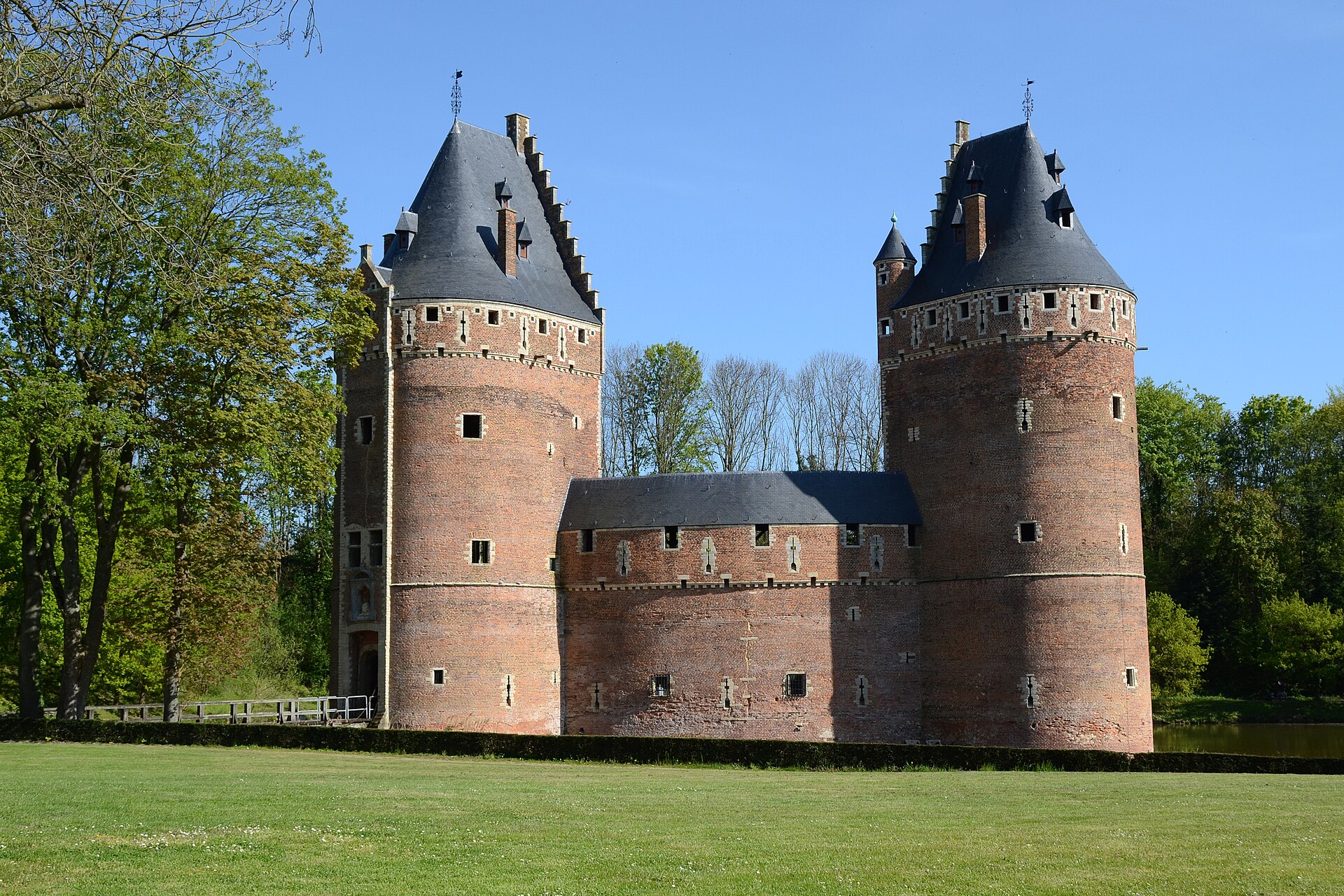
Just south of Brussels, close enough for an easy half-day escape, Beersel is the moated fortress of everyone's imagination: three fat round towers of warm red brick, steep slate roofs, and a wide moat you cross by a little bridge to reach the gate. Built around 1300 to guard the southern approach to Brussels, it's compact, unshowy, and wonderfully atmospheric, a real working medieval castle rather than a romantic reinvention.
Beersel has no grand furnished interiors, and that's part of its charm; you come for the walls, the wooden galleries, and the view across the moat rather than for stately rooms. It's an easy trip from the capital and pairs beautifully with a walk in the green Sonian Forest nearby, or with a glass of the region's famous lambic beer, brewed in these very valleys.
4. Kasteel van Ooidonk, Deinze
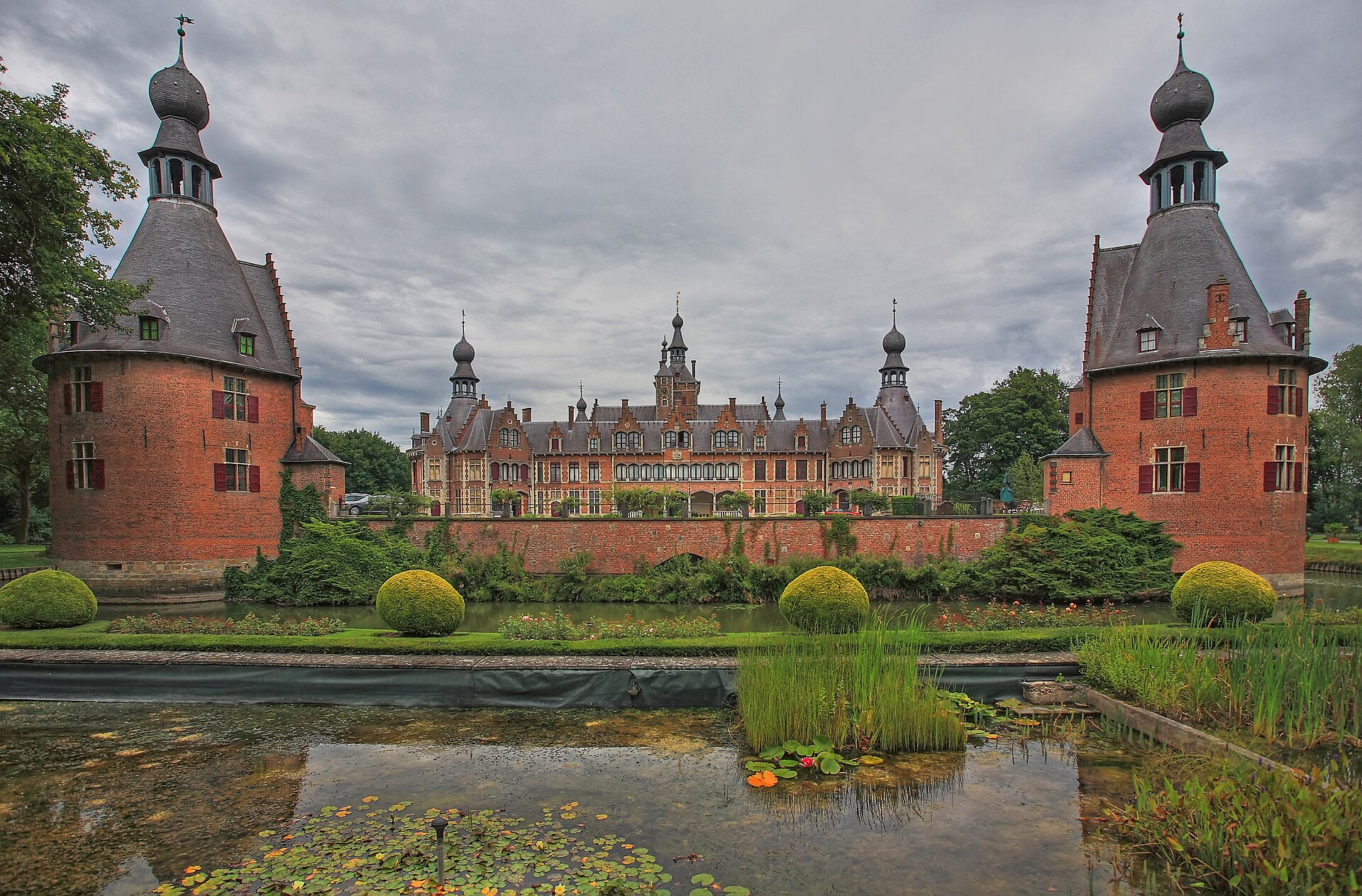
Set in a loop of the river Lys near Deinze, Ooidonk is the most elegant castle in Flanders: a moated Renaissance château of stepped gables and onion-domed towers, mirrored perfectly in its own still water. Though a stronghold has stood here since the Middle Ages, the graceful building you see was raised in the 1590s in the Flemish-Spanish style, all decorative brickwork and slender crowned turrets rather than brute defensive walls.
Surrounded by parkland and reflected in its encircling moat, Ooidonk looks its dreamlike best from the far bank, where the whole château seems to float. The interiors are still lived in and open on select days, but the grounds and the approach are the real spell. It makes a serene stop on a slow loop through the Leie region, the gentle river country the Flemish painters loved.
5. Kasteel van Laarne, near Ghent
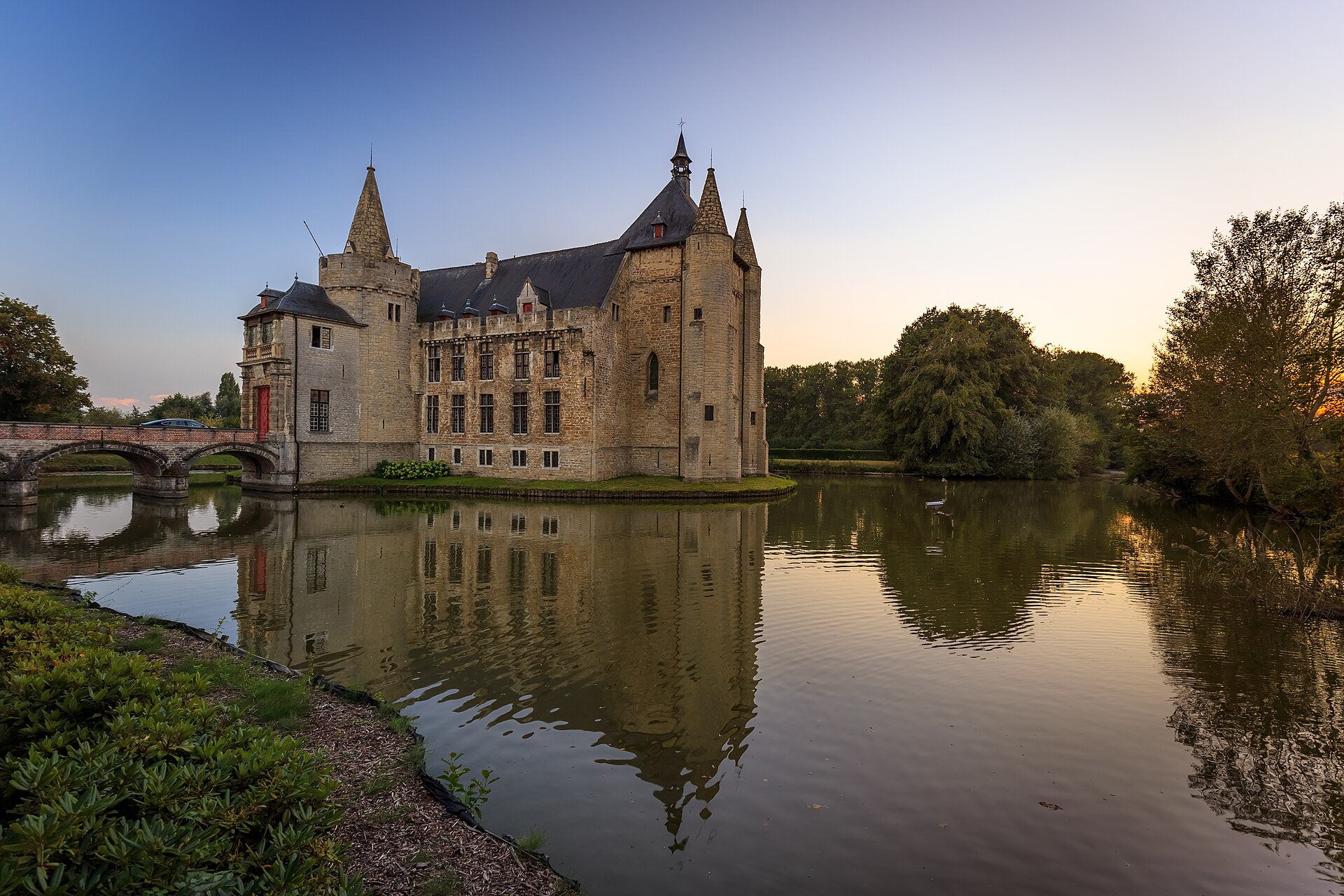
A short hop east of Ghent, Laarne is a beautifully preserved moated castle that has kept its stern medieval bones while softening into something almost storybook. Its pentagonal ring of walls and heavy round towers dates back to the 12th and 13th centuries, when it guarded the approaches to Ghent, but later centuries added elegant living quarters within, so the fortress now cradles a graceful country house at its heart.
Cross the stone bridge over the moat and you step into a quiet courtyard; inside are collections of furniture, tapestries, and one of Belgium's finest displays of antique silverware. It's little visited and all the more atmospheric for it, an easy and rewarding detour for anyone basing themselves in Ghent.
Now south and east, into the wooded hills of Wallonia and the Ardennes, where Belgium's castles turn wilder.
6. Château de Bouillon, Bouillon
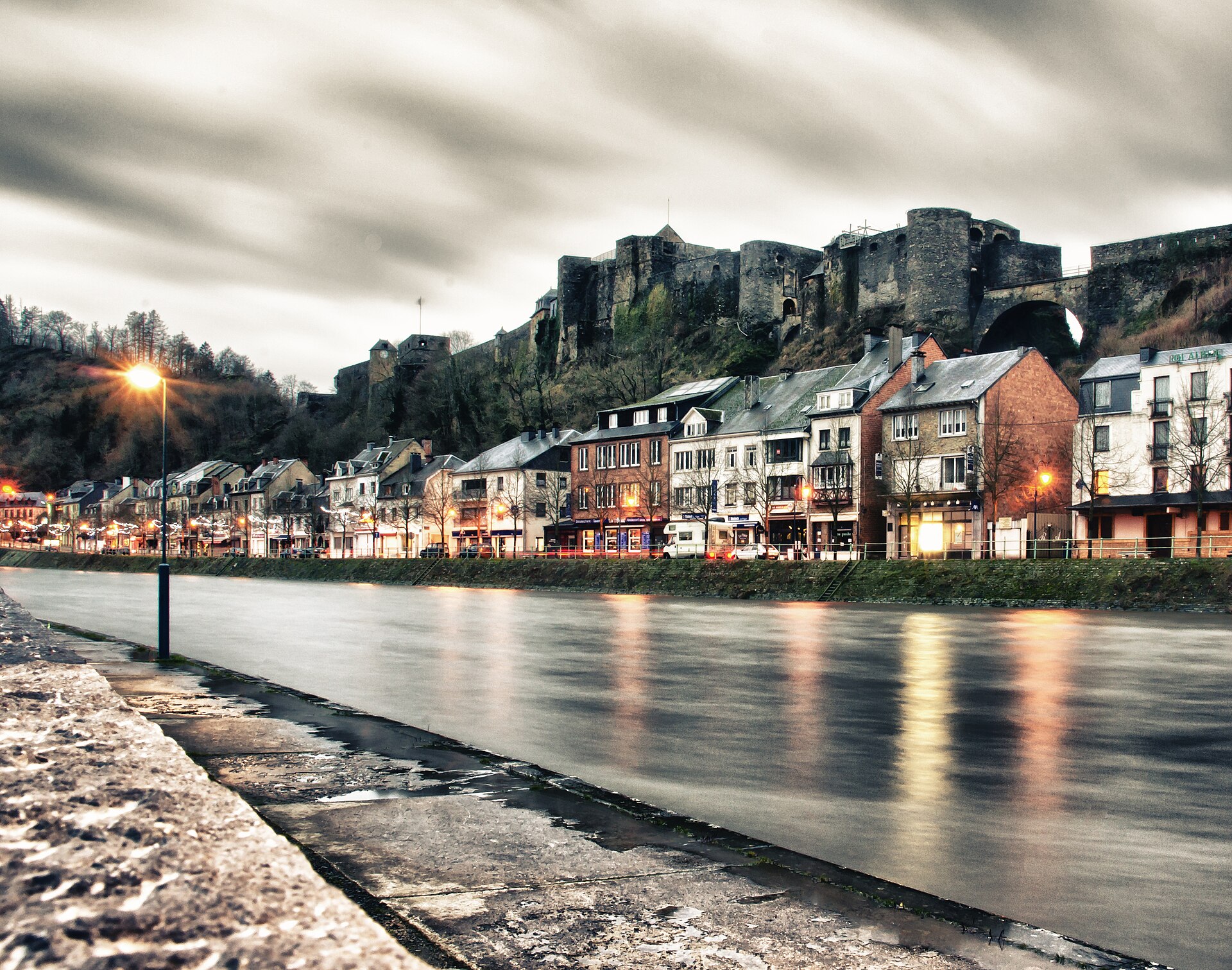
The oldest and most formidable castle in Belgium, Bouillon sprawls along a rocky ridge high above a tight loop of the Semois river, its ramparts, drawbridges, and rock-cut passages seeming to grow straight out of the stone. This was the seat of Godfrey of Bouillon, the knight who led the First Crusade and famously sold the castle to fund the expedition in 1096, and its thousand years of history are written into every worn step and tunnel.
Unlike the polished châteaux of Flanders, Bouillon is raw and elemental: a place of dark stairways, deep wells, and dizzying views down onto the slate roofs of the town below. Come at dawn, when mist pools in the river valley and the fortress floats above it, and pair it with a paddle on the Semois or a drive through the wooded hills of the Belgian Ardennes.
7. Château de Lavaux-Sainte-Anne, Rochefort
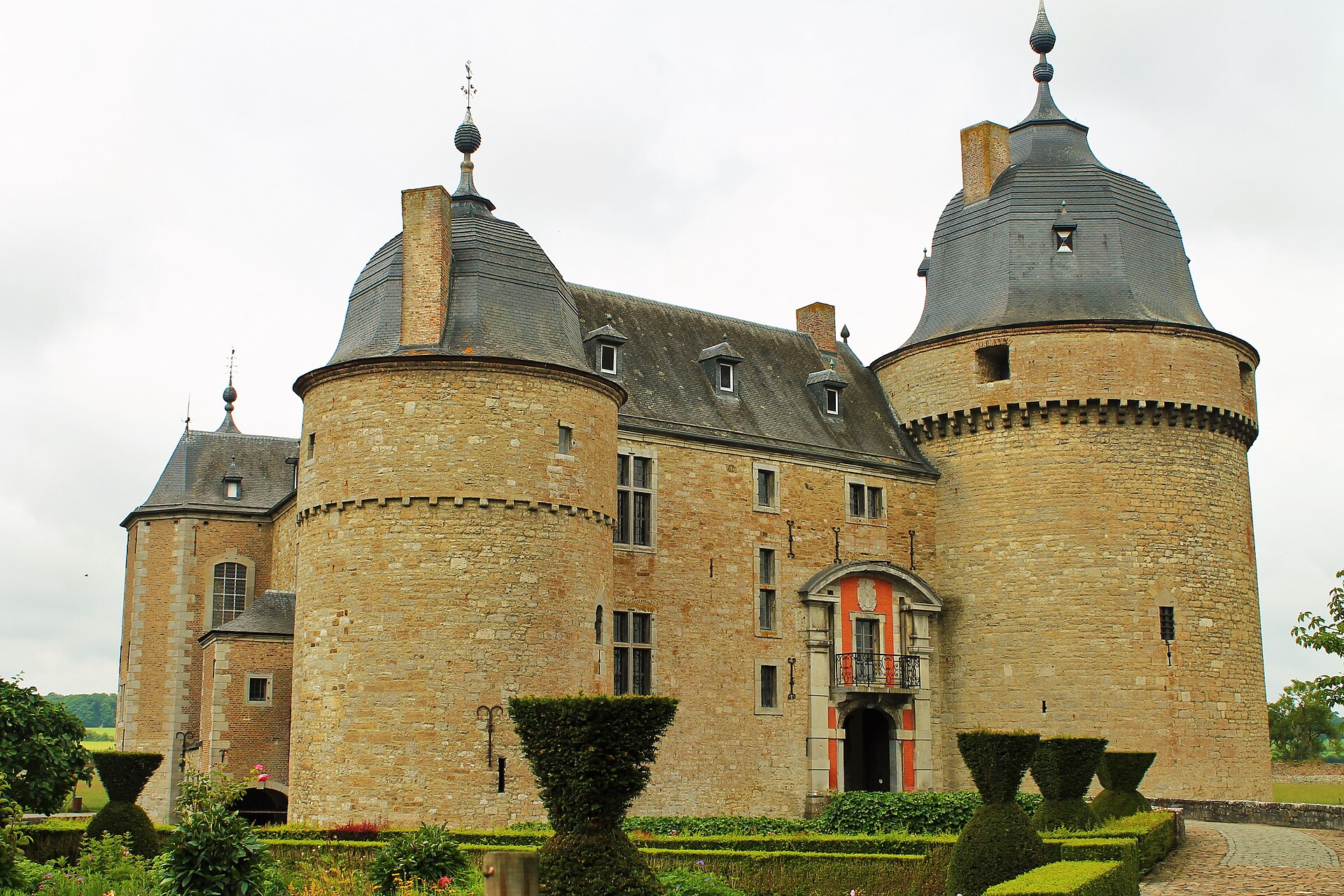
Rising from the flat meadows near Rochefort, Lavaux-Sainte-Anne is a picture-perfect moated castle: three great round towers capped with bell-shaped roofs, reflected in a wide, still moat that doubles the whole fairytale in the water. Begun in the 15th century as a defensive stronghold, it was later softened into a comfortable seigneurial residence, so it carries both the drama of a fortress and the grace of a country château.
Today it houses charming small museums of rural and hunting life in the region, but the real magic is simply walking the path around the moat, watching the towers turn on the water as you go. Set in gentle countryside on the edge of the Ardennes, it pairs naturally with the caves of Han-sur-Lesse and the wild Lesse valley nearby.
8. Château de Modave, Modave
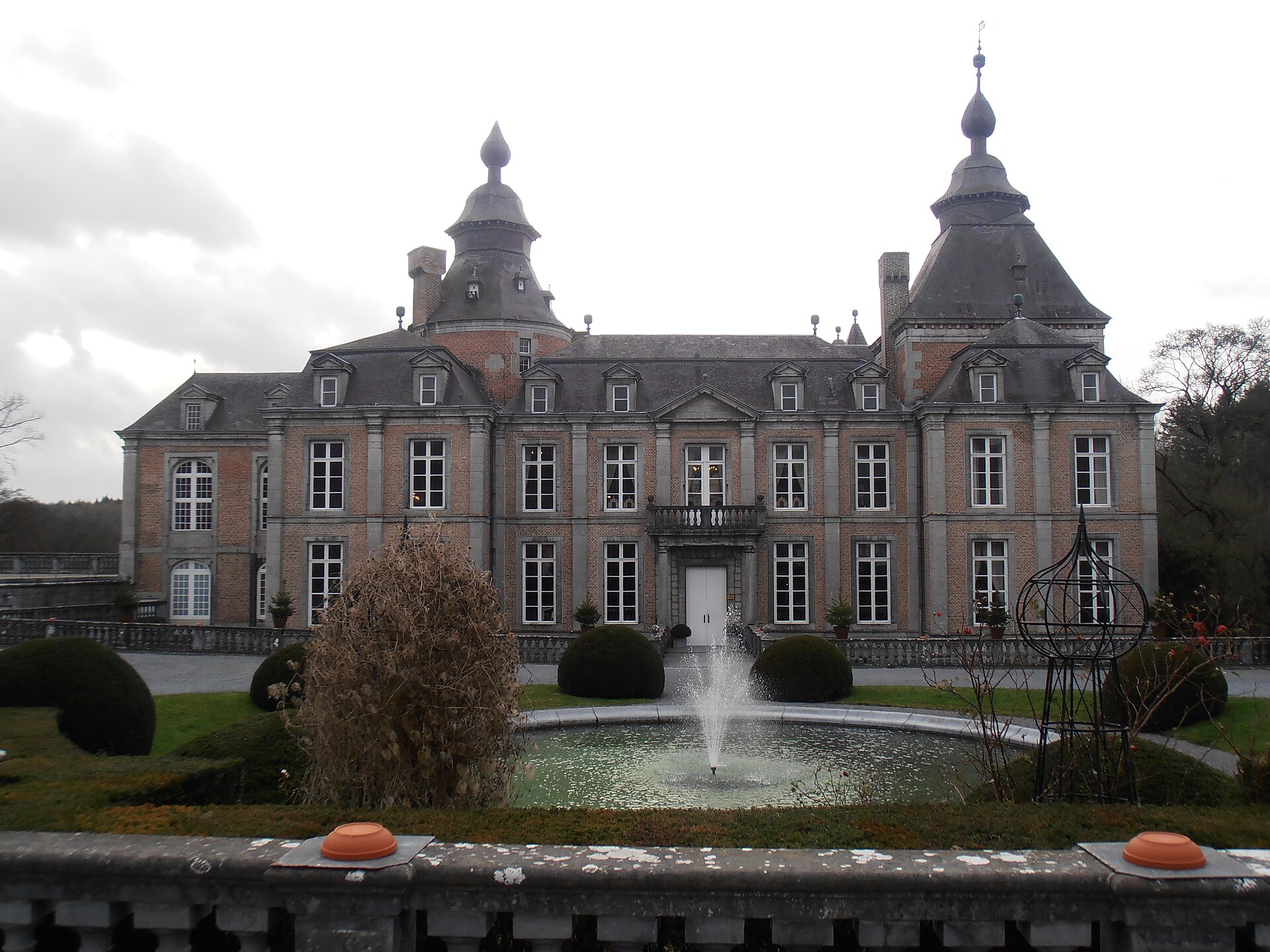
Perched on the very edge of a cliff above the wooded Hoyoux valley, Modave is a castle with a drop: from the garden front it looks like a stately 17th-century château, but walk to the far side and its walls fall away sheer to the river far below. That vertiginous setting, high on its rock with the forest tumbling beneath, is what lifts it out of the ordinary and into the storybook.
Inside are richly decorated rooms, elaborate stucco ceilings, and a surprising footnote in the history of engineering: the water wheel built here in the 17th century to raise water up the cliff went on to inspire the machine that fed the fountains of Versailles. With landscaped grounds and marked walks in the valley below, Modave makes a lovely, uncrowded stop in the countryside south of Liège.
9. Château de Reinhardstein, Ovifat
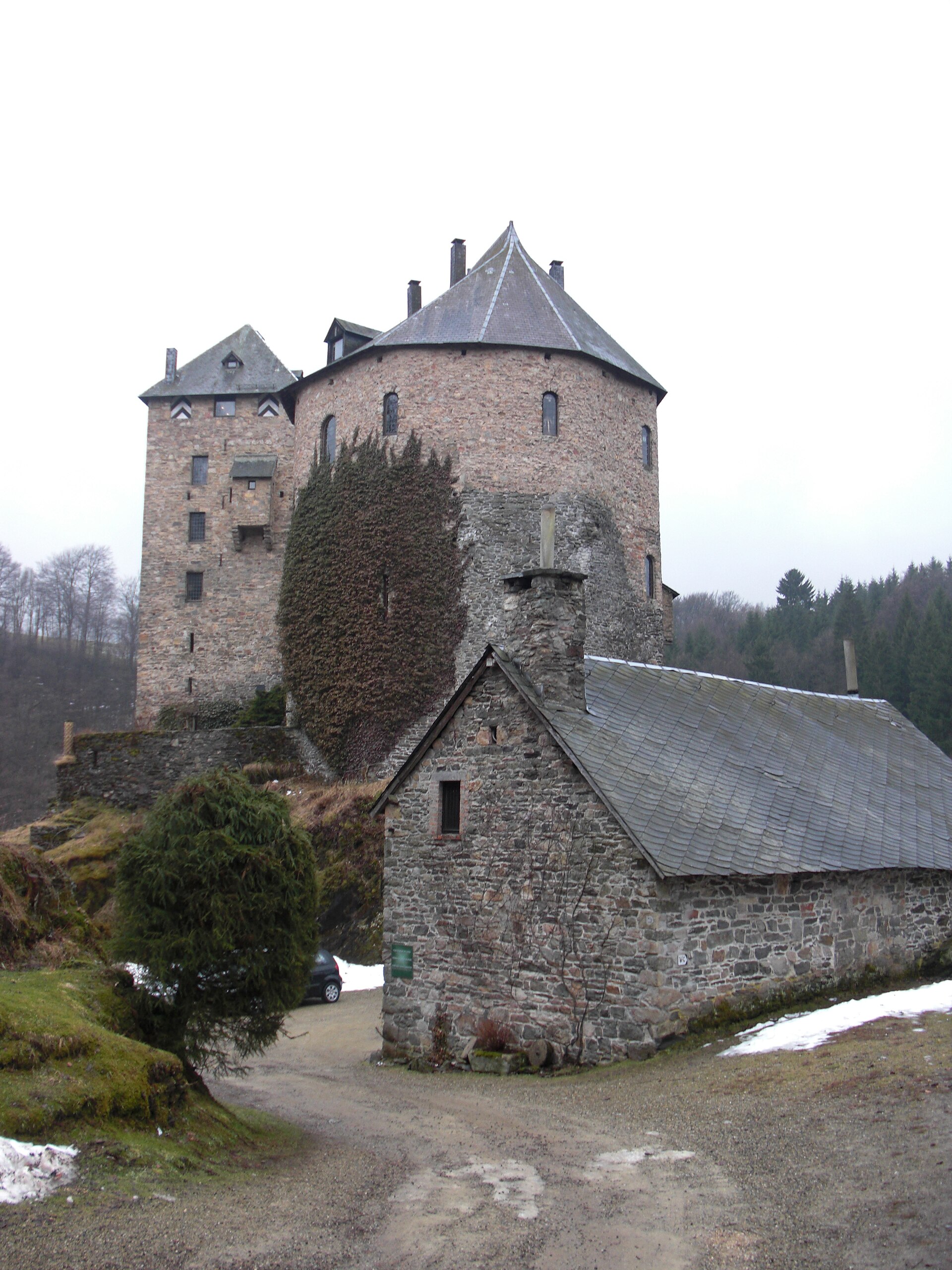
Deep in the far east of the country, in the German-speaking High Fens, Reinhardstein is Belgium's most improbably romantic castle: a tall, slender keep of dark stone rising from a wooded crag above the tumbling Warche river, so hidden in its valley that you barely see it until you're upon it. First built in 1354, it fell into ruin over the centuries and was lovingly rebuilt from the 1960s, a labour of love that restored its steep roofs and towers to their fairytale silhouette.
It's one of the highest castles in Belgium, wrapped in forest and often in mist, with a wonderfully remote, edge-of-the-map feel. Visits are usually by guided tour, so it's worth checking times before you go, and the surrounding High Fens, a wild plateau of moorland and boardwalk trails, make the trip out here doubly worthwhile.
Where to start
If you can only chase one, make it Château de Vêves for pure fairytale silhouette, or Bouillon for raw, cliff-top drama and a thousand years of history. Short on time and based in a city? Gravensteen sits right in the middle of Ghent, and Beersel is a quick escape from Brussels. And for the thrill of a castle almost no one you know has seen, point yourself east to remote, mist-wrapped Reinhardstein.
Belgium's castles fall into two easy moods. The moated châteaux of Flanders, Ooidonk, Laarne, Beersel, are gentle, graceful, and easy to reach by train or a short drive. The keeps of Wallonia and the Ardennes, Bouillon, Modave, Reinhardstein, Lavaux-Sainte-Anne, are wilder and more scattered, and a car makes chasing them far easier. Either way, you'll be amazed how many storybook castles this small country manages to hide.
Keep wandering through the Castles & Fortresses collection for more, or tell us the Belgian castle we should add next. That's the fun of an atlas. It's never quite finished.
Keep exploring
Neuschwanstein: The Castle That Felt Like a Childhood Dream
The Bavarian castle I dreamed about as a little girl, and everything I learned visiting it: the history, the views, and the great horse-carriage mistake.
12 Fairytale Castles That Look Straight Out of a Storybook
Twelve castles that look conjured straight out of a fairytale. From the icon that inspired Disney to the cliff-cave keep most travelers never find.
The Most Enchanting Cafés & Beer Bars in Belgium
Belgium's real magic hides in its brown cafés and old beer bars, from a Bruges pub open since 1515 to a Brussels den where the surrealists once drank.