12 Fairytale Castles That Look Straight Out of a Storybook
Photo: Felix / UnsplashSome castles guard borders. Others guard stories. This is a field guide to the second kind, the ones that rise out of forests and cliffs and morning mist looking less like fortresses and more like something a storyteller dreamed up and forgot to erase.
You'll find a few names here you already know; a great fairytale-castle list would feel incomplete without them. But the real joy of this atlas is what comes after the famous ones. The storybook keeps hiding on lake islands and inside cliff caves that most travel guides walk right past. Skip the obvious, and the magic gets quieter, stranger, and entirely your own.
Here are twelve castles that look straight out of a storybook, and how to see each one at its most enchanting.
1. Neuschwanstein, Bavaria, Germany
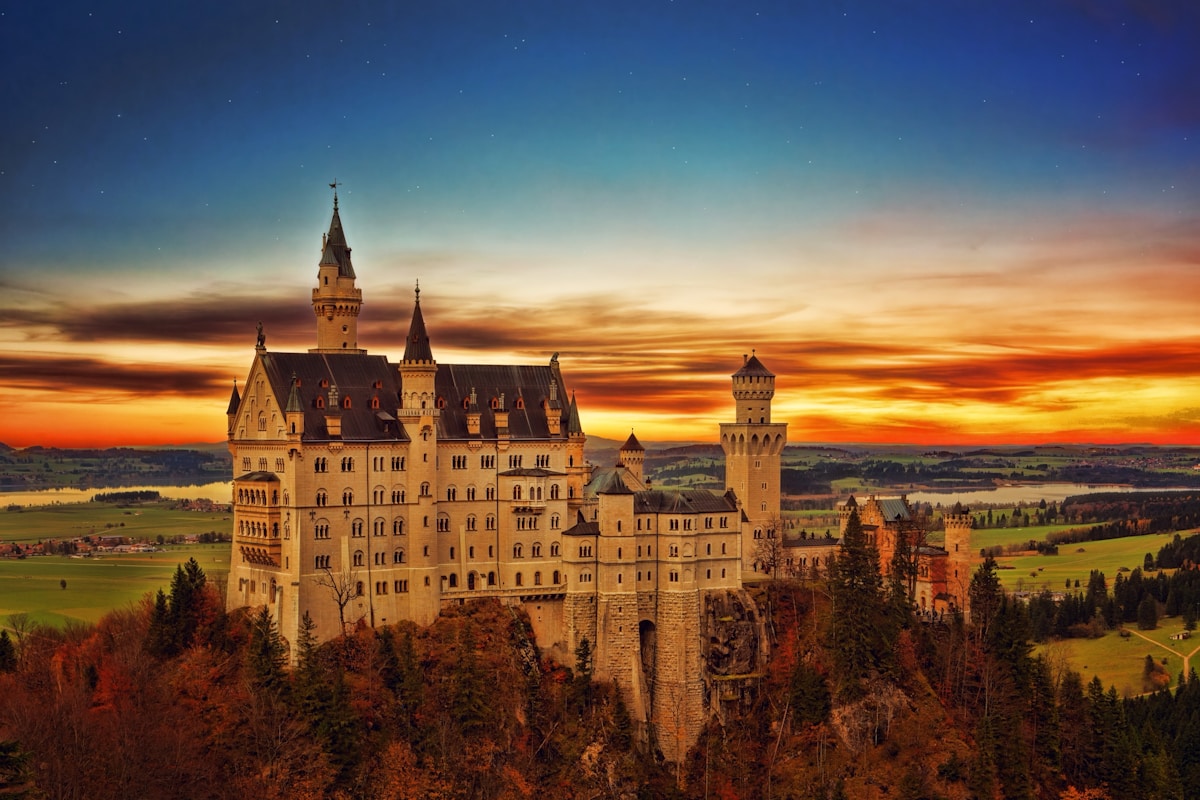
The one that started it all. King Ludwig II's hillside fantasy was never a working fortress. It was a stage set for a fairy tale, built from 1869 to look centuries older than it was. Ludwig, a shy and dreamy king obsessed with the operas of Richard Wagner, filled its halls with swans, grottoes, and painted legends, and its soaring white towers went on to inspire the Disney castle. He died mysteriously in 1886 before it was finished, which only deepened the romance of the place.
What makes it feel magical is the setting as much as the silhouette: the castle floats above the Bavarian forest with the Alps behind it and a glacial lake, the Alpsee, shining below. In autumn the surrounding trees turn gold; in winter it looks frosted onto the mountainside.
The trick is to catch it without the crowds. Come first thing in the morning before the day-trippers arrive from Munich, and walk up to the Marienbrücke, Queen Mary's Bridge, for the classic view across the gorge. Better still, stay a night in the valley village of Hohenschwangau so you're at the gate when it opens rather than fighting the midday queues.
2. Château de Chambord, Loire Valley, France
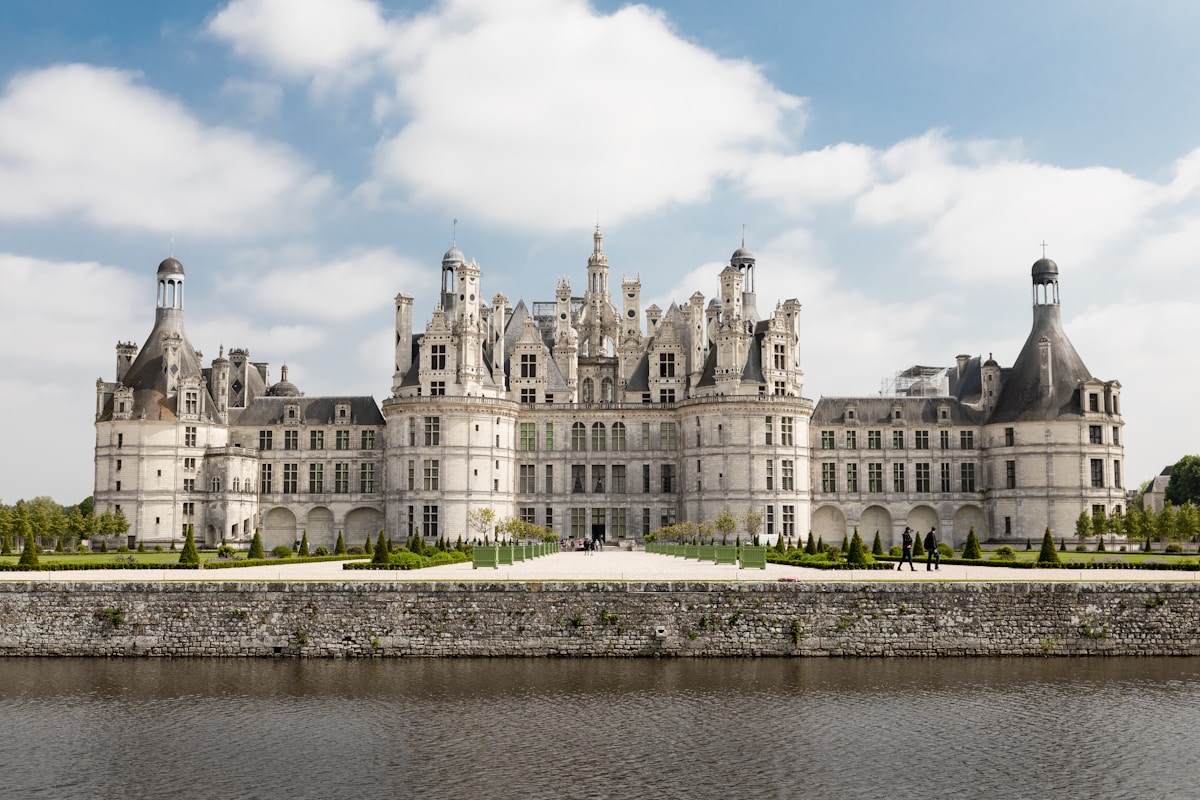
The most flamboyant castle in France, and possibly the most extravagant roofline in Europe, a skyline of turrets, chimneys, cupolas, and spires so busy it looks like a stone forest growing out of the roof. Built by King Francis I in the 16th century as a grand hunting lodge he barely used, it was less a home than a statement: a Renaissance king showing the world what he could conjure.
At its heart is the famous double-helix staircase, two spirals winding around a shared core so that people going up never meet those coming down. It's a piece of geometric wizardry often attributed to Leonardo da Vinci, who spent his final years nearby. Climb it to the rooftop terrace and you're standing in the middle of that forest of chimneys, with the vast royal forest stretching to the horizon.
Chambord is grand rather than hidden, but it makes a perfect anchor for a slower Loire route. Pair it with the quieter, more intimate châteaux nearby, Chenonceau arching over its river, or the gardens of Villandry, and you trade the tour-bus circuit for something closer to time travel.
3. Pena Palace, Sintra, Portugal
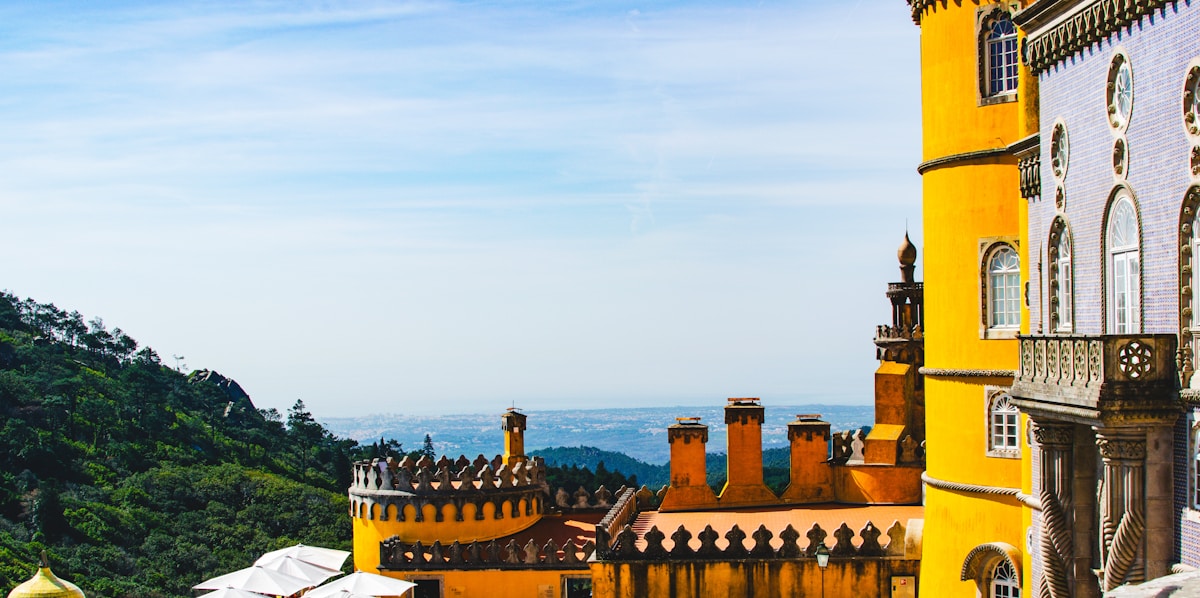
If the others whisper, Pena sings. Perched high above the misty hills of Sintra, it's painted in egg-yolk yellow and blushing red, stitched together from Moorish domes, Gothic arches, Manueline stonework, and pure Romantic imagination. Built in the 1840s by King Ferdinand II on the ruins of an old monastery, it was one of Europe's first great Romanticist palaces, a deliberate fairy tale in stone, and now a UNESCO World Heritage Site.
The whimsy isn't only in the colors. Mythological creatures coil around doorways, watchtowers perch at improbable angles, and the surrounding park hides fern-lined paths, hidden ponds, and viewpoints that suddenly reveal the palace glowing above the treetops. Sintra's frequent sea mist rolls through and turns the whole hilltop dreamlike.
Sintra fills up fast, and Pena is the busiest jewel in it. Arrive right at opening and start with the palace itself before the tour groups reach the summit, then lose the crowds entirely in the sprawling gardens below. Going midweek and outside high summer makes an enormous difference.
4. Eilean Donan, Highlands, Scotland
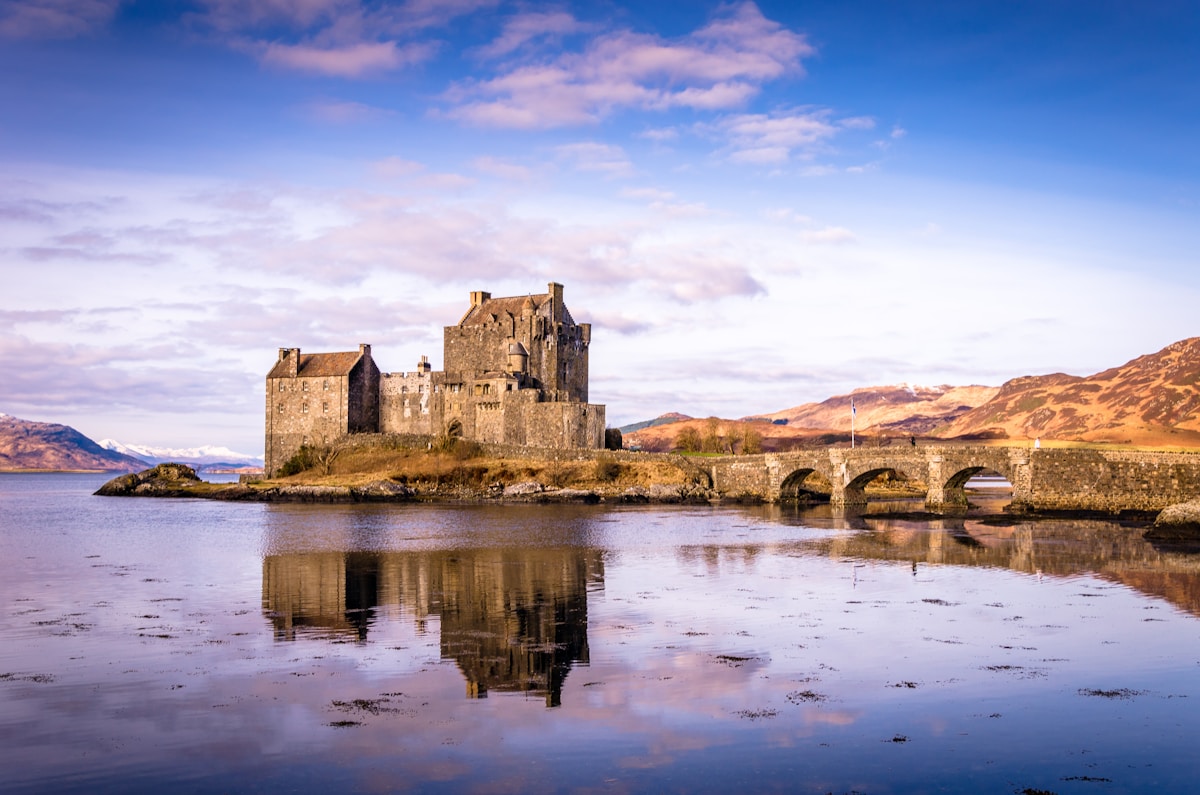
Where three sea lochs meet, on its own small tidal island, Eilean Donan sits wrapped in Highland mist and reached by a graceful arched stone bridge. It's one of the most photographed castles in the world for good reason. It looks like the last stronghold at the edge of a fairy tale, with the mountains of Kintail rising behind it.
Its story has a twist: the castle you see is largely a 20th-century resurrection. The medieval original was blown apart in 1719 during a Jacobite uprising and lay in ruins for two hundred years, until one man, Lieutenant Colonel John MacRae-Gilstrap, rebuilt it stone by stone between 1912 and 1932. That romance of restoration is part of why it feels so complete and so cinematic.
Golden hour and moody weather are your friends here. The greyer and more dramatic the sky, the more magical it reads, and the reflection in still water doubles the effect. It sits right on the road to the Isle of Skye near the village of Dornie, so time your arrival for early morning or late evening, when the coaches have moved on and the light goes soft.
5. Burg Eltz, Rhineland-Palatinate, Germany
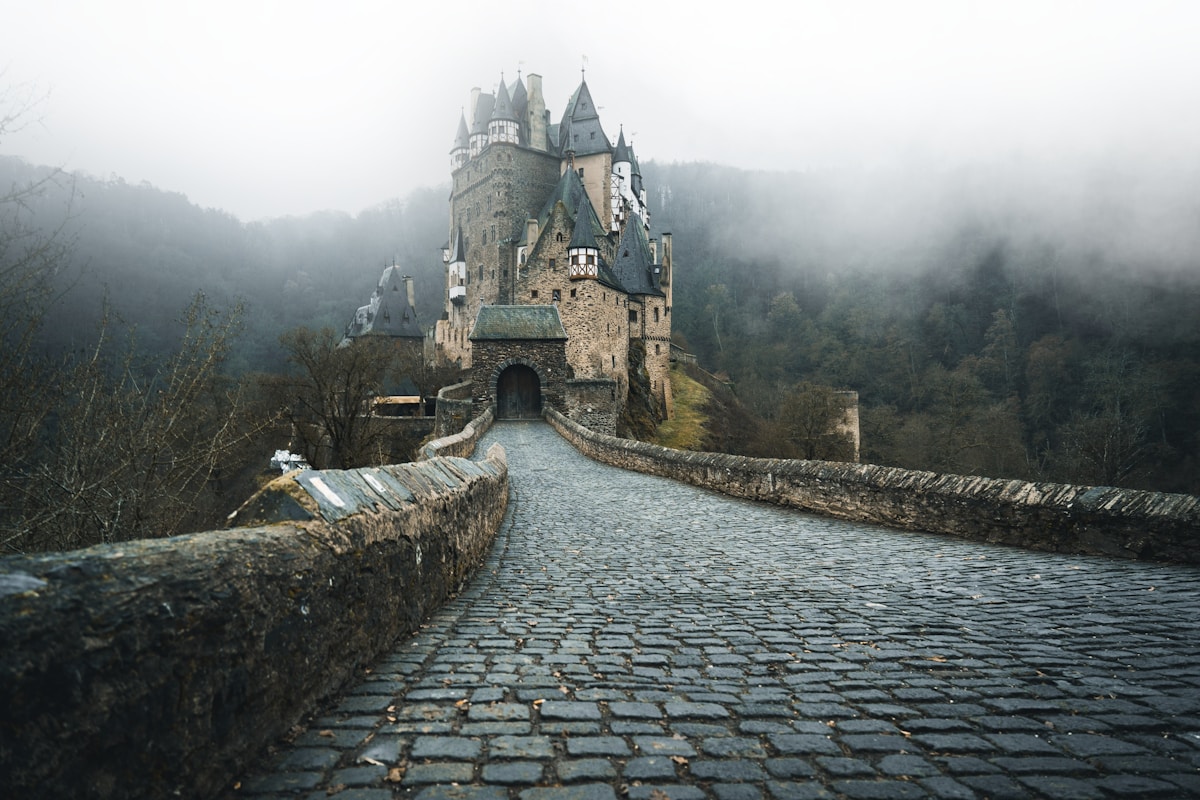
A thousand-year keep tucked into a forested valley above the Moselle, Eltz looks less like a fortress and more like something a storyteller dreamed up: a cluster of turrets, timber, and steep pointed rooftops crowded together on a single rock, half-swallowed by the trees. It has belonged to the same family for over 850 years, some thirty-three generations of the Eltz line, and has never been destroyed, which is why it feels so impossibly, intimately intact.
Because it grew over centuries, with different branches of the family adding their own towers, it has the wonderfully organic, piled-up quality of a castle from a picture book rather than the rigid symmetry of a royal showpiece. Inside, original furnishings, armor, and a famous treasury survive, so it reads as a lived-in home rather than a museum set.
Most people photograph it from the wooded trail as they descend toward it. The castle reveals itself all at once through a gap in the trees. Come right at opening and walk down from the upper car park; arrive early enough and that first magical view can be entirely yours before anyone else is on the path.
6. Hohenzollern, Baden-Württemberg, Germany
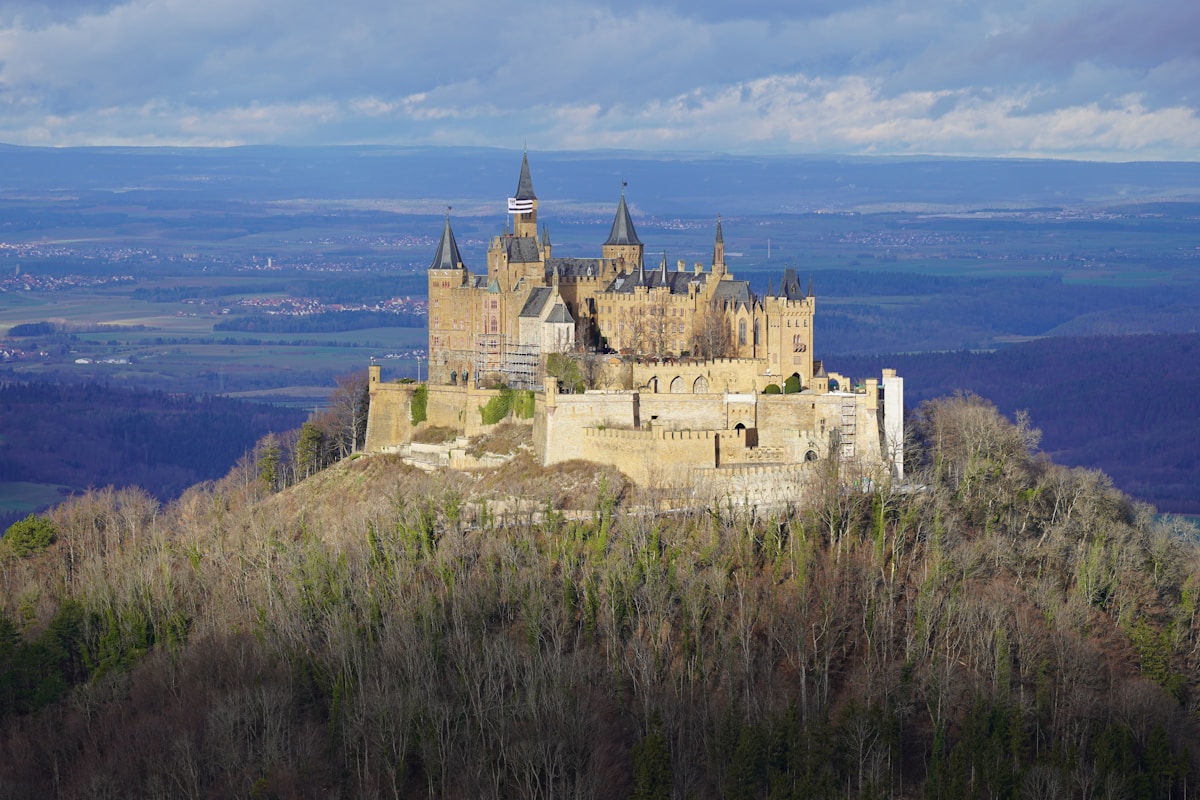
On a clear morning, Hohenzollern appears to float, its towers and battlements rising above a sea of low cloud that pools in the valleys below, so the whole castle seems to drift free of the earth. It's the ancestral seat of the Prussian royal family, and the neo-Gothic castle you see today was built in the mid-19th century as a romantic tribute to the dynasty's origins, all soaring spires and sweeping ramparts on a lone conical peak.
Even without the clouds it's spectacular, a fortress in the sky ringed by wooded hills, with panoramic views across the Swabian countryside from its walls. Inside are the family's crown jewels and portrait halls, but it's the exterior silhouette, bristling with towers, that earns its fairytale reputation.
To chase the famous "castle above the clouds" effect, come at sunrise after a cool, damp night in autumn or winter, when fog settles low in the valleys and the peak rises clear above it. Even on ordinary mornings the early light and quiet make it worth beating the crowds up the hill.
7. Alcázar of Segovia, Castile and León, Spain
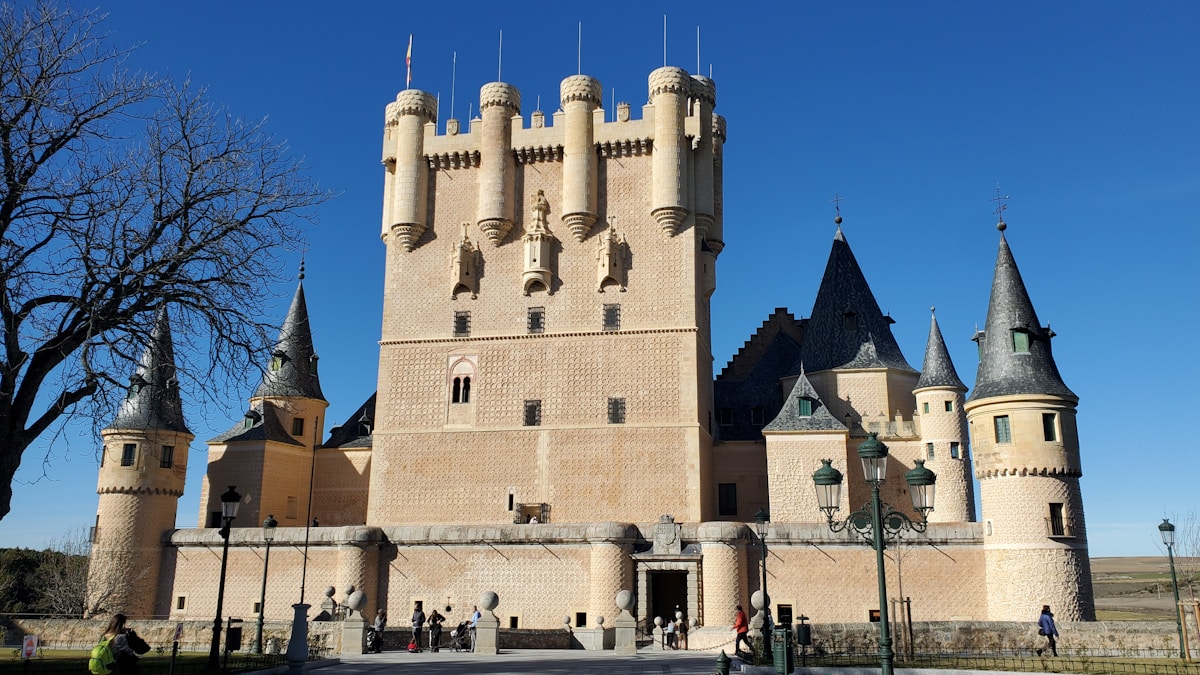
Shaped like the prow of a great stone ship, the Alcázar juts out dramatically over a rocky crag where two rivers meet, its slate-blue turrets tapering into pointed spires that look almost too elegant to be real. Its storybook silhouette is one of the most cited inspirations for Disney's Cinderella castle. And standing in the valley below, looking up at it sailing over the cliffs, that's very easy to believe.
The Alcázar has been a Moorish fort, a royal palace, an artillery school, and a state prison across its long life; Queen Isabella I set out from here to be crowned in 1474. That layered history shows in its interiors, ornate ceilings, a throne room, and a tower you can climb for sweeping views over the terracotta rooftops of Segovia.
For the full ship-on-a-cliff profile, walk out to the Mirador del Alcázar or down into the valley below the walls, where the castle reveals its most dramatic angle. Pair it with the city's astonishing Roman aqueduct and a wander through the old town, and Segovia easily fills a magical day trip from Madrid.
8. Peleș Castle, Carpathian Mountains, Romania
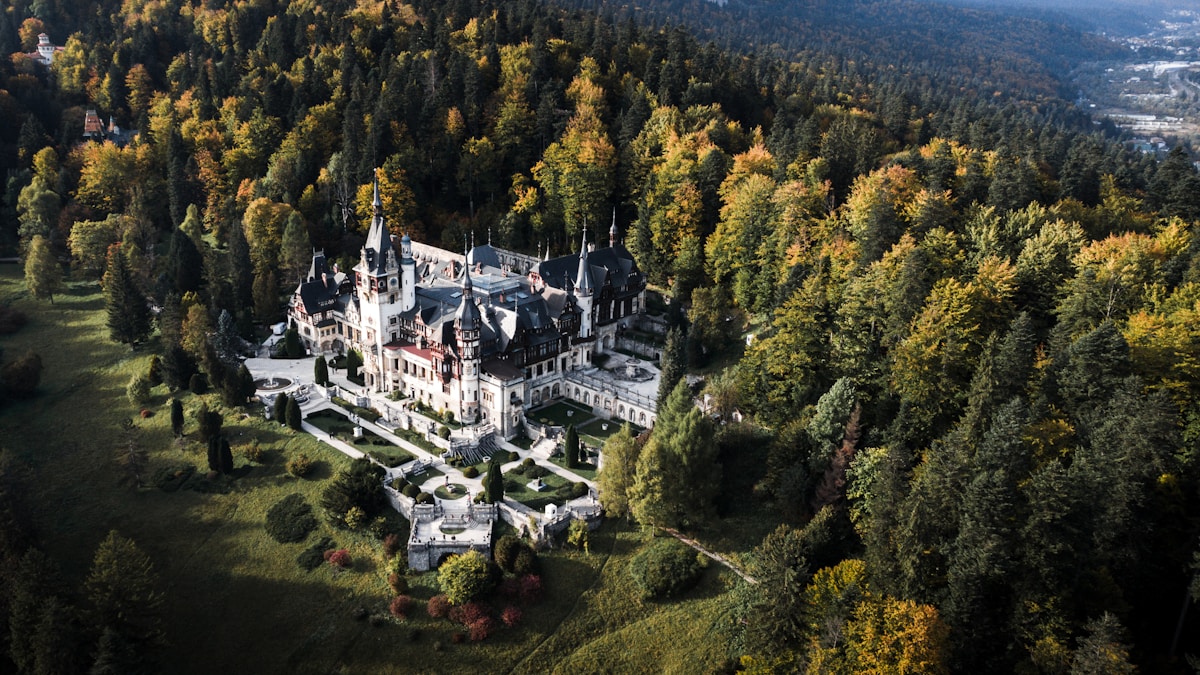
A Neo-Renaissance jewel-box set against dark pine forest, Peleș is as enchanting inside as out, all carved wood, stained glass, and turrets that seem designed by someone who'd read every fairy tale twice. Built between 1873 and 1914 for Romania's King Carol I as a summer residence, it was one of the most modern palaces of its era, and reputedly among the first castles in Europe to be fully powered by its own locally generated electricity.
The setting is half the spell. Peleș sits in a clearing in the wooded Carpathian mountains near the resort town of Sinaia, with alpine peaks rising behind it and manicured terraces and fountains in front. Its interiors are famously lavish, over a hundred rooms of intricate woodwork, armor, tapestries, and a stained-glass ceiling that opens to the sky.
Combine it with nearby Sinaia and its monastery, and consider approaching by train through the mountains for a slower, more scenic arrival than the day-trip crowds take. Come outside peak summer weekends and the forest setting feels like a genuine secret in the trees.
Now for the ones most travel blogs skip, the reason this atlas exists.
9. Predjama Castle, Slovenia
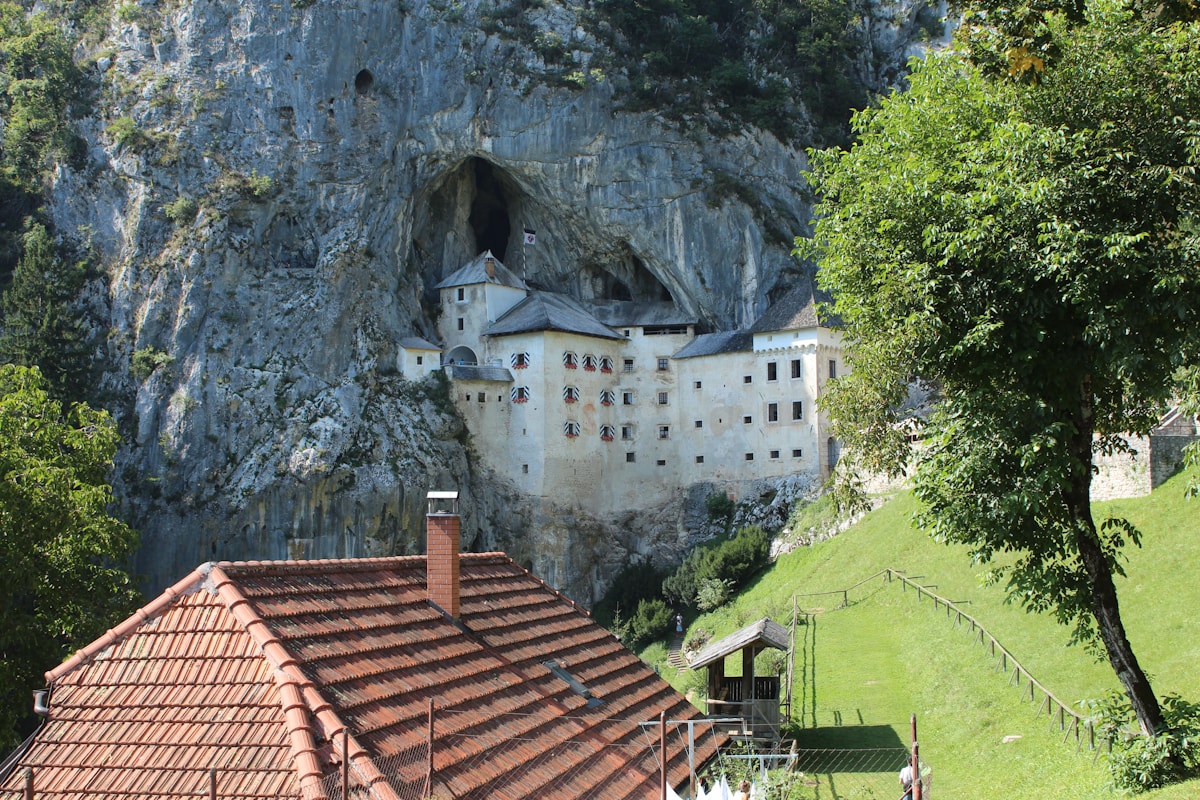
Built straight into the mouth of a cliff cave, Predjama is unlike any other castle on earth: half-fortress, half-cavern, wedged beneath a 120-metre rock overhang as if it grew out of the stone rather than being set against it. From a distance it seems to be swallowed by the cliff; up close, its pale Renaissance façade fills the cave mouth like a face peering out of the rock.
It comes with a legend worthy of its setting. In the 15th century the rebellious knight Erazem of Predjama is said to have withstood a long siege here, supplied through secret passages in the caves behind the castle, until he was betrayed and struck down, so the story goes, in the least dignified room in the fortress. Those tunnels are real, and a network of caves runs deep into the hillside behind the walls.
Predjama is genuinely offbeat and still nowhere near as crowded as it deserves to be. Pair it with the vast Postojna Cave just down the road, and aim for the quieter shoulder-season months, when the valley is at its most atmospheric and you might have the cliff-castle view nearly to yourself.
10. Trakai Island Castle, Lithuania
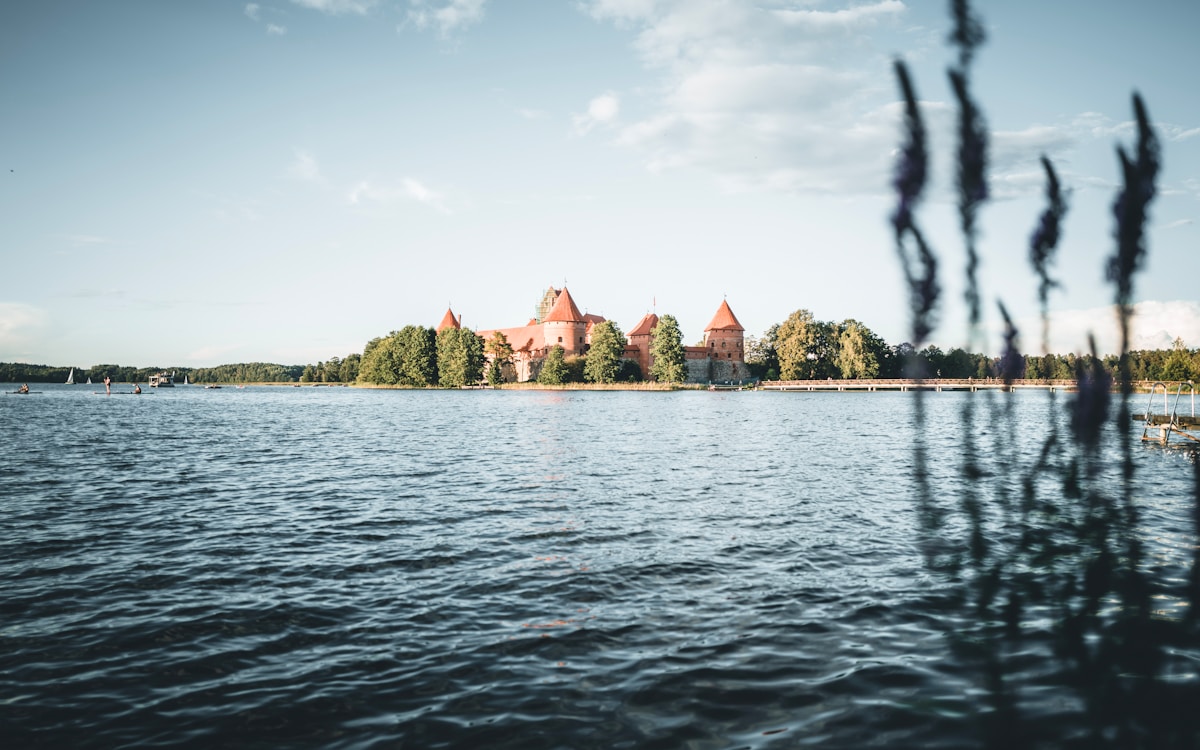
Red-brick and impossibly picturesque, Trakai sits on its own island in a glassy lake, reached by a series of wooden footbridges, a Gothic fortress that turns the whole scene into a fairy tale in miniature. Built in the 14th and 15th centuries and closely tied to Grand Duke Vytautas, it was once a seat of power in medieval Lithuania, and its warm brick walls and steep red roofs reflect beautifully in the surrounding water.
It's one of the most storybook-perfect castles in Europe, and one of the most under-photographed by English-language travel guides, which means it still feels like a discovery. Carefully restored in the 20th century, the island keep now houses a museum, but the real magic is simply approaching it across the bridges with the lake stretching away on both sides.
For the best view, rent a rowboat or kayak and see it from the water, where the castle seems to float free of any shore. Come in winter and the lake freezes solid, turning the whole scene white and silent, a completely different, equally enchanting kind of magic. It's an easy trip from Vilnius, so go early to beat the day crowds.
11. Bojnice Castle, Slovakia
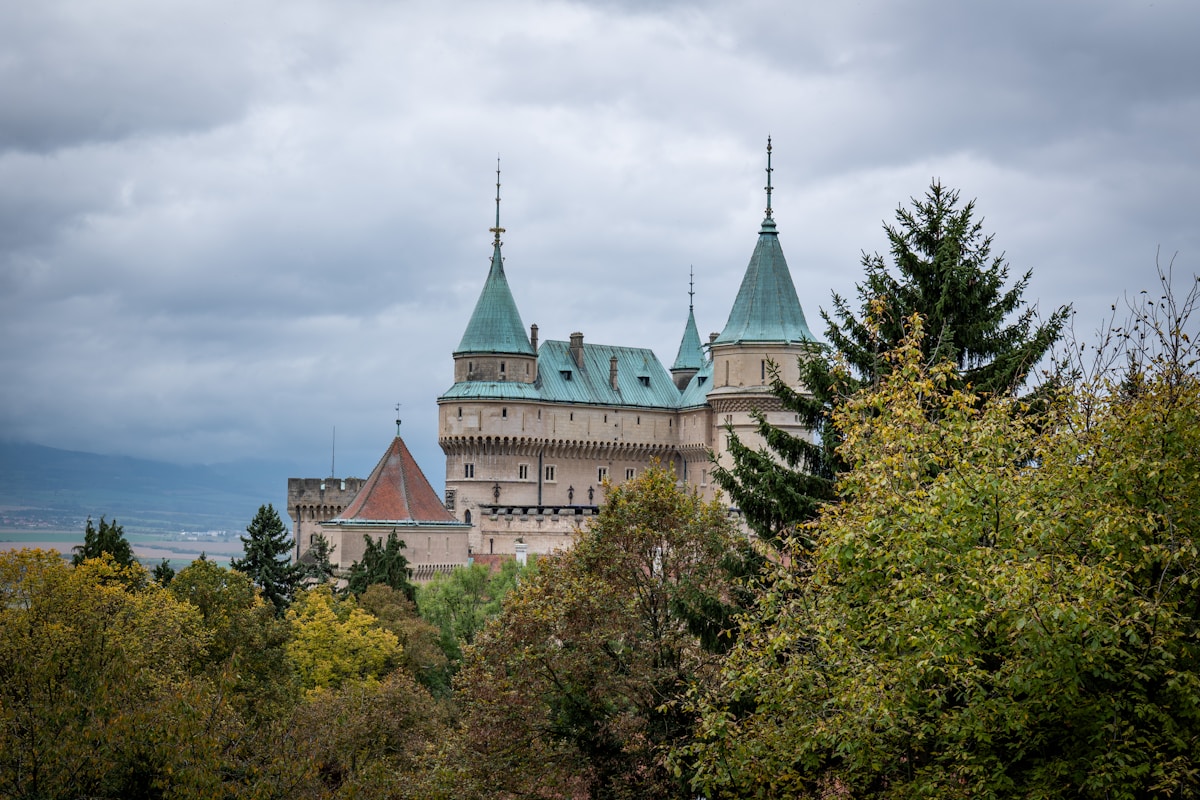
Bojnice looks lifted directly from an illustrated fairy tale, pale towers, pointed turrets, and a romantic silhouette rising above a leafy spa town, yet it remains almost unknown outside central Europe. It's the kind of place that makes readers stop and ask "how have I never heard of this?"
Though its foundations are medieval, the dreamlike castle you see today was reimagined in the late 19th century by Count Ján Pálffy, who was so enchanted by the Loire châteaux of France that he rebuilt his Slovak seat in their romantic image. The result is pure fantasy: fairytale spires outside, and inside a golden cave, a chapel, and richly decorated halls, all wrapped around a courtyard.
Bojnice is beloved locally and hosts one of Europe's oldest castle festivals, the International Festival of Ghosts and Spirits, along with atmospheric night tours, so it's worth checking what's on when you visit. Time your trip for a quieter weekday, and pair it with the town's thermal spa for a wonderfully old-world day.
12. Bran Castle, Transylvania, Romania
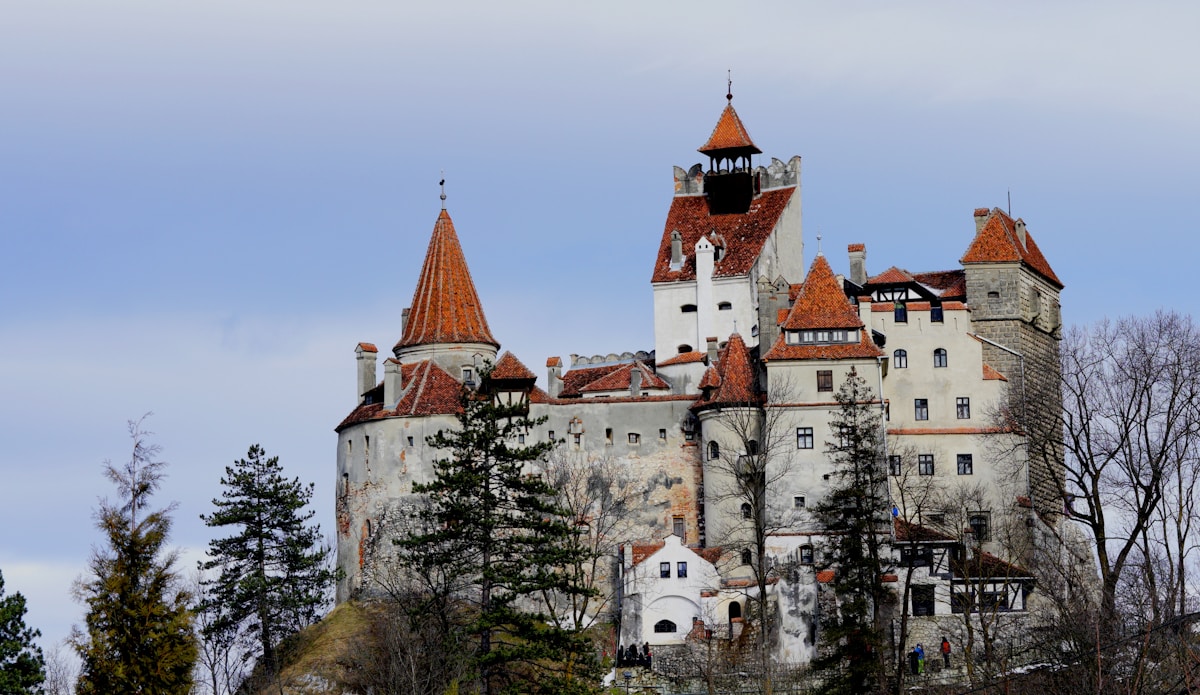
The famous "Dracula's castle," perched dramatically on a rocky bluff at the edge of the Carpathians, its towers and steep roofs clustered high above the road below. The Dracula connection is largely legend and clever marketing. Bram Stoker never visited, and the real link to Vlad the Impaler is tenuous at best. But the castle earns its place here on pure atmosphere: narrow stairs, shadowed courtyards, secret passages, and a fog that rolls in off the mountains as if on cue.
Beyond the vampire lore, Bran has a gentler history too. In the 20th century it became a beloved royal residence of Queen Marie of Romania, and its interiors are furnished with her collections, giving the shadowy exterior a surprisingly warm and lived-in heart.
Go early or late to dodge the busiest hours and the souvenir bustle at the gates, and let the mist do the storytelling. Bran is at its most magical when the mountains behind it disappear into cloud. It pairs well with the nearby medieval town of Brașov, one of Transylvania's most charming bases.
Where to start
If you can only chase one, let it be the one that surprises you: Predjama for sheer strangeness, Trakai for that perfect island silhouette, or Bojnice for the thrill of a fairy-tale castle almost no one you know has seen. And if you're after the icons, catch Neuschwanstein or Pena at dawn, before the crowds turn the magic into a queue.
The storybook feeling of these castles isn't only in the stone. It's in the moment you round a bend in the trees and the towers appear out of nowhere, making the whole world feel make-believe.
Keep wandering through the Castles & Fortresses collection for more, or let us know the storybook castle we missed. That's the fun of an atlas. It's never quite finished.
Keep exploring
The Most Enchanting Castles in Belgium
Belgium hides a startling number of storybook castles, from a six-towered fairytale keep near Dinant to a moated brick fortress on the edge of Brussels.
Neuschwanstein: The Castle That Felt Like a Childhood Dream
The Bavarian castle I dreamed about as a little girl, and everything I learned visiting it: the history, the views, and the great horse-carriage mistake.
The Most Enchanting Cafés & Beer Bars in Belgium
Belgium's real magic hides in its brown cafés and old beer bars, from a Bruges pub open since 1515 to a Brussels den where the surrealists once drank.