12 of the World's Most Enchanting Historic Cafés
Photo: Yelkrokoyade / Wikimedia Commons (CC BY-SA 3.0)A great café is never really about the coffee. It's about the room: the marble and the mirrors, the murmur and the clink, the sense that you could sit for hours and let a whole afternoon dissolve. And the very best of them carry something more, a weight of years, a hush of old conversations, a feeling that you've stepped through a door into another century. This is a field guide to that kind of café, the grand old rooms where poets argued, revolutions were plotted, and the light still falls exactly as it did a hundred years ago.
These aren't secret hideaways; a few are famous, and rightly so. But the real joy of this atlas is what comes after the icons, the gilded coffee houses and faded Belle Époque salons in cities most café lists never leave. Skip the obvious, and the enchantment gets quieter, stranger, and entirely your own.
Here are twelve historic cafés worth crossing a city, or a continent, for, and how to catch each one at its most magical.
1. Café Central, Vienna, Austria
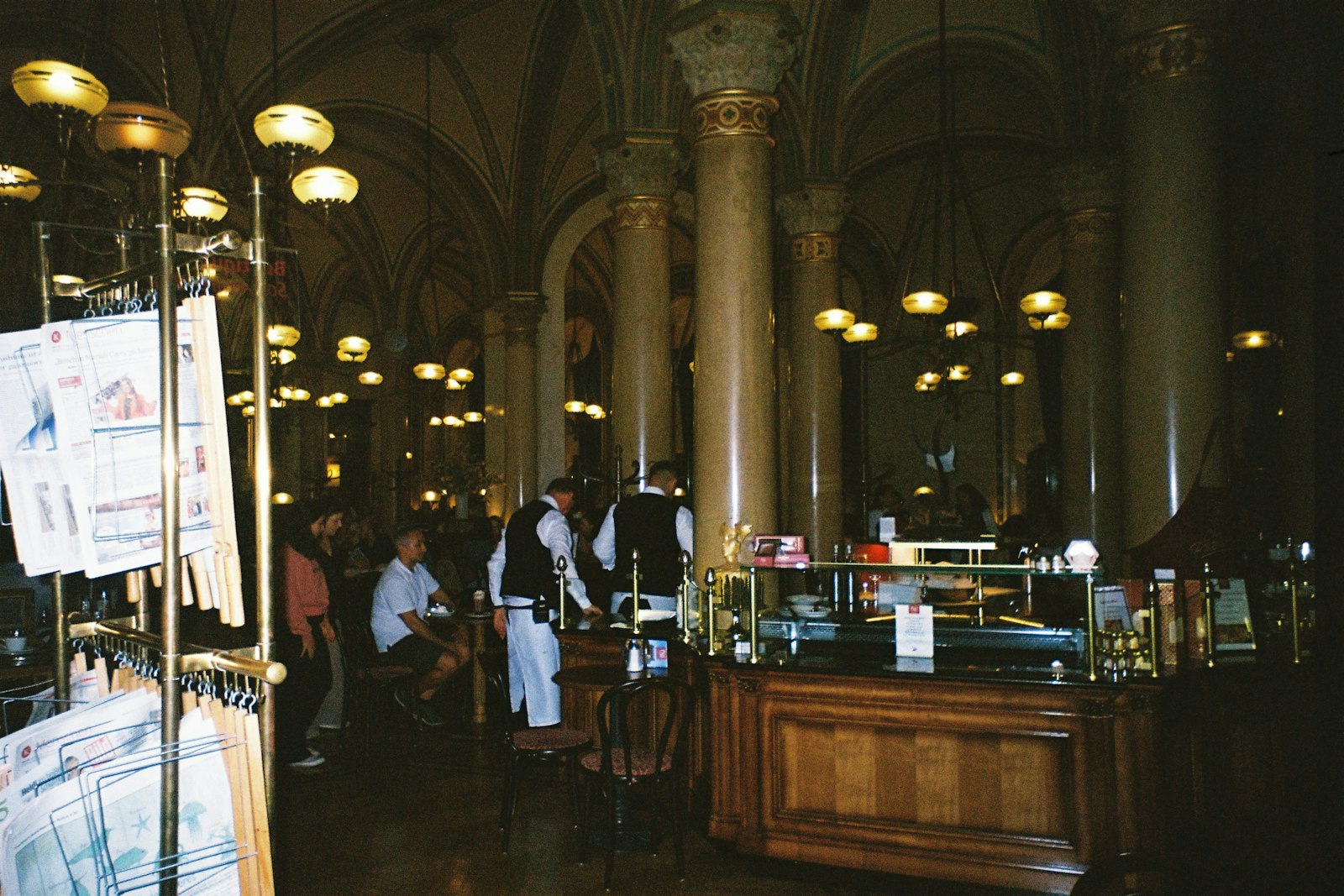
If there is a cathedral of coffee, it is Café Central. Beneath soaring vaulted ceilings and slender marble columns, under glowing chandeliers and arched windows, Vienna's most storied coffee house has been serving cake and conversation since 1876. In its heyday it was a second home to the city's thinkers and eccentrics, and it is said that everyone from Freud to Trotsky lingered for hours over a single cup, as the Viennese tradition happily allows.
The room itself is the spectacle: a grand, palatial hall that feels more like a ballroom than a café, with a piano playing softly and a glass case of glossy Viennese pastries near the door. Order a melange and a slice of something rich, and settle in the way generations of regulars have, with a newspaper, a notebook, or simply time to spare.
It is popular, so expect a queue at peak hours. Come mid-morning on a weekday or later in the afternoon, when the light through the arched windows is loveliest and the room quiets enough to feel the century of conversation still hanging in the air.
2. Caffè Florian, Venice, Italy
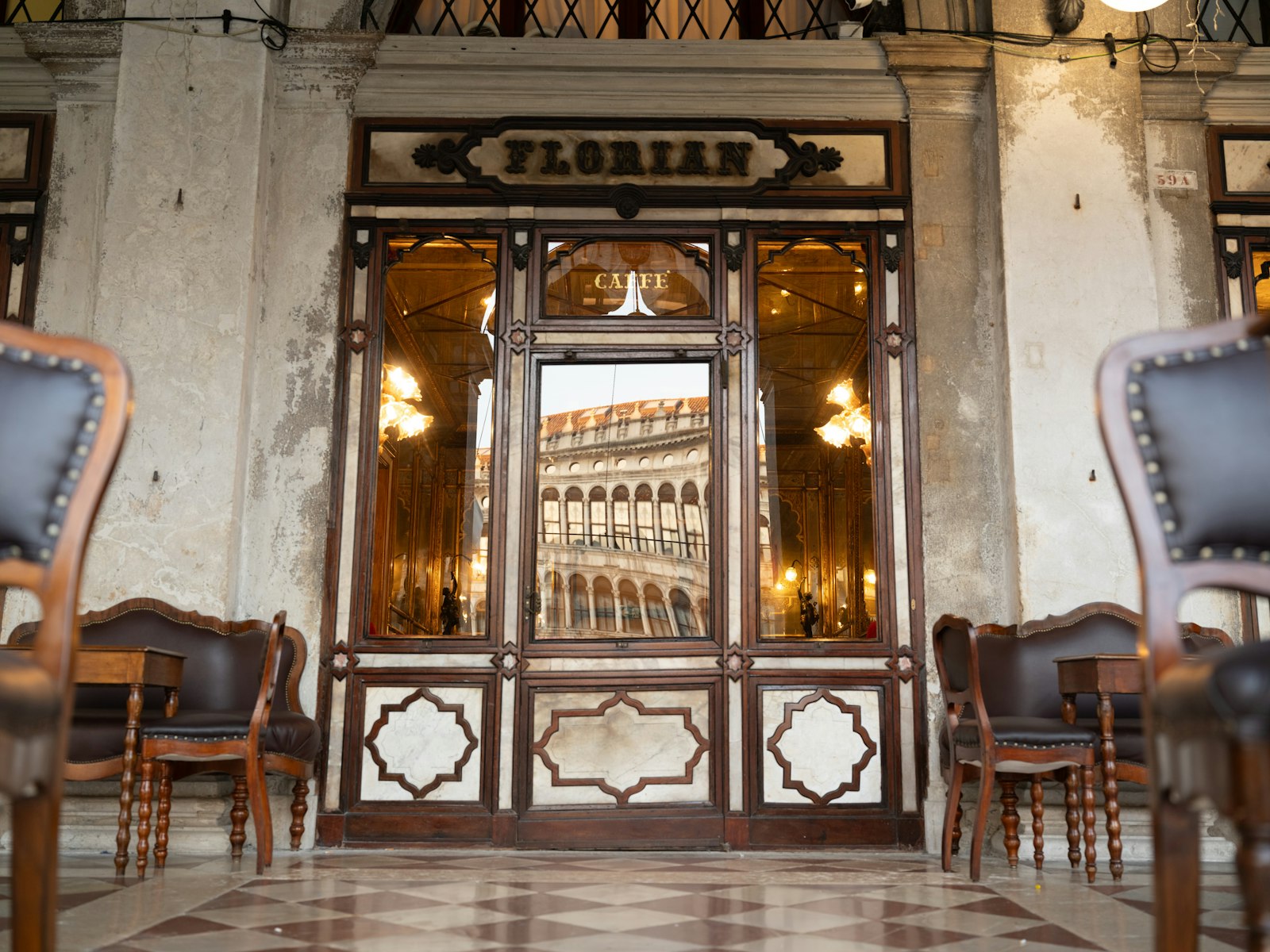
Opened in 1720 under the arcades of St Mark's Square, Caffè Florian is often called the oldest café in continuous operation in the world, and stepping inside is like stepping into a jewellery box. Its little salons are lined with gilded mirrors, painted panels, red velvet banquettes, and frescoes of allegorical figures, each room a small, glowing world of its own. Casanova is said to have been a patron, drawn, the story goes, partly by the fact that it was one of the few cafés that admitted women.
Outside, tables spill onto the great square, where an orchestra plays and the basilica glimmers across the way. Yes, the prices are legendary, and the music carries a supplement, but you are not really paying for the coffee. You are paying for three centuries of Venice, and an hour inside one of the most beautiful rooms in Europe.
Come off-season, or early in the day, when Venice is quieter and you can actually get a seat in the inner rooms. Order a hot chocolate or a spritz, take the smallest, most ornate salon you can find, and let yourself feel gloriously out of time.
3. Café de Flore, Paris, France
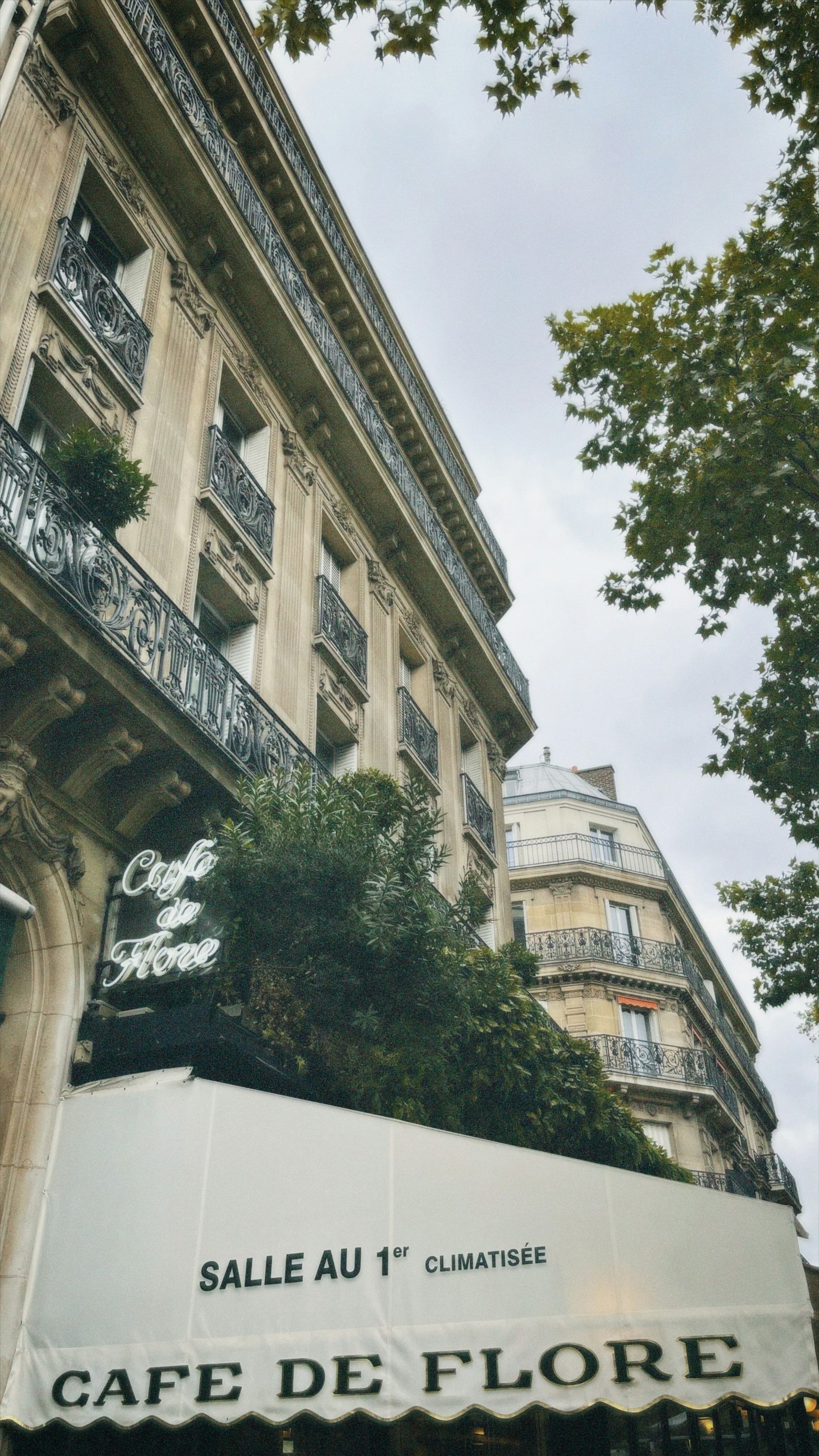
No café has done more to shape the myth of Parisian café life than the Flore. On a corner of the Left Bank, with its red awnings, mirrored walls, and mahogany-and-brass interior largely unchanged for a century, it was the daily haunt of Sartre and de Beauvoir, who all but ran their philosophy from a corner table, and of a long parade of writers, artists, and filmmakers since.
The magic here is less about ornament than atmosphere: the white-aproned waiters, the tightly packed marble tables, the parade of Paris passing the terrace. It is a place to sit with a coffee or a glass of wine and practise the fine Parisian art of watching the world go by while pretending to read.
To feel the literary ghosts rather than the tourists, come early in the morning, when locals still outnumber visitors and the terrace catches the sun. Take an inside table on a cold day, order a café crème, and stay far longer than the coffee strictly warrants.
4. New York Café, Budapest, Hungary
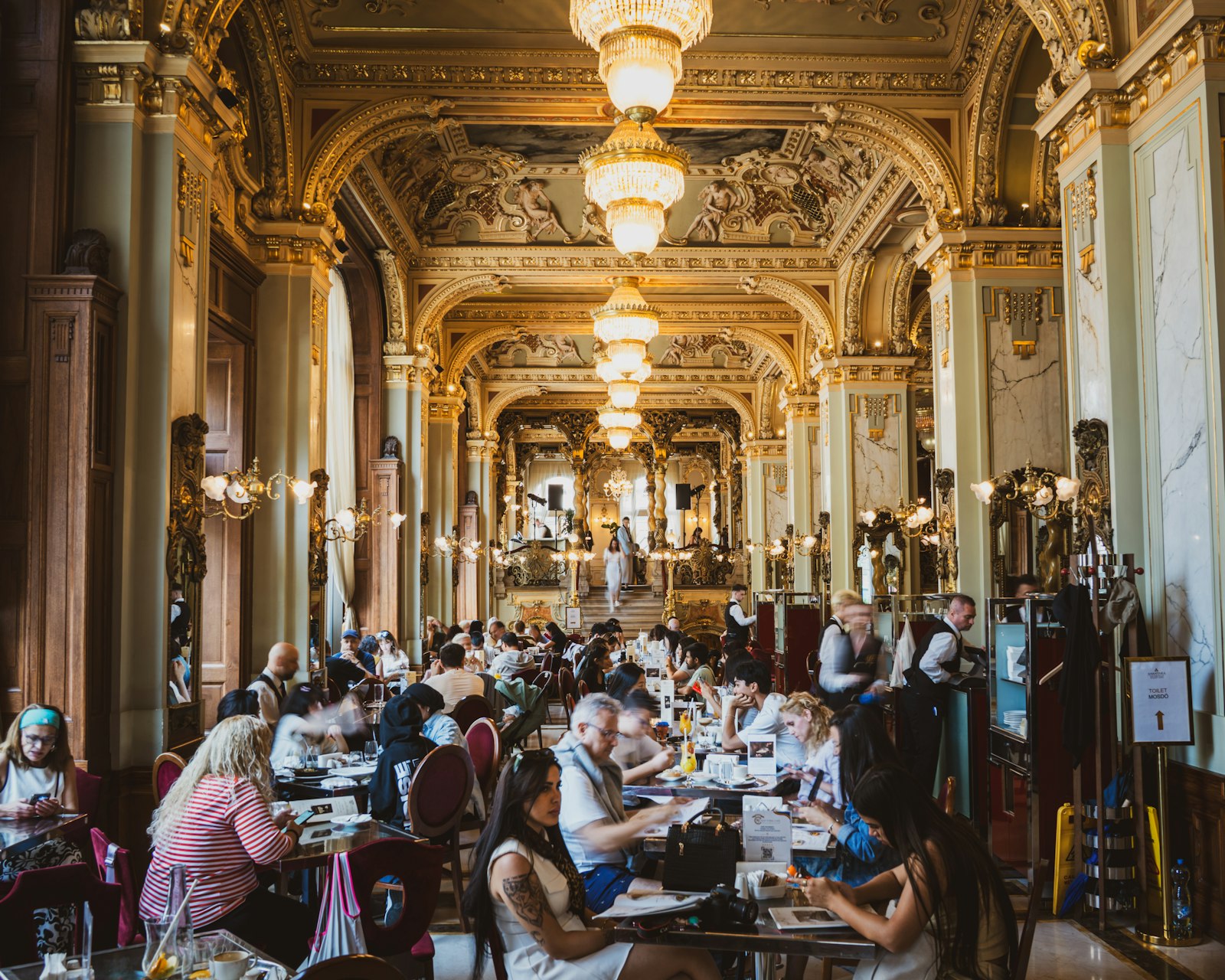
Often called the most beautiful café in the world, and it does not feel like an exaggeration when you walk in. The New York Café is pure, unrestrained opulence: twisting marble columns, gilded flourishes, frescoed ceilings soaring two storeys high, chandeliers dripping light onto every table. Opened in 1894 as the ground-floor showpiece of a grand palazzo, it became the favourite haunt of the city's writers and editors, who filled its tables with manuscripts and gossip.
Legend has it that when it opened, the writers who adored it threw the café's key into the Danube so that it could never close its doors. Whether or not that's true, it captures the feeling of the place: a coffee house so splendid you never want to leave.
It is no secret, so it draws a crowd and a queue. Go right at opening, or in the quieter late afternoon, order coffee and cake beneath the frescoes, and sit upstairs on the balcony if you can, for the full sweep of the gilded room below.
And now the ones most café lists never leave their own city to find, the reason this atlas exists.
5. Café Majestic, Porto, Portugal
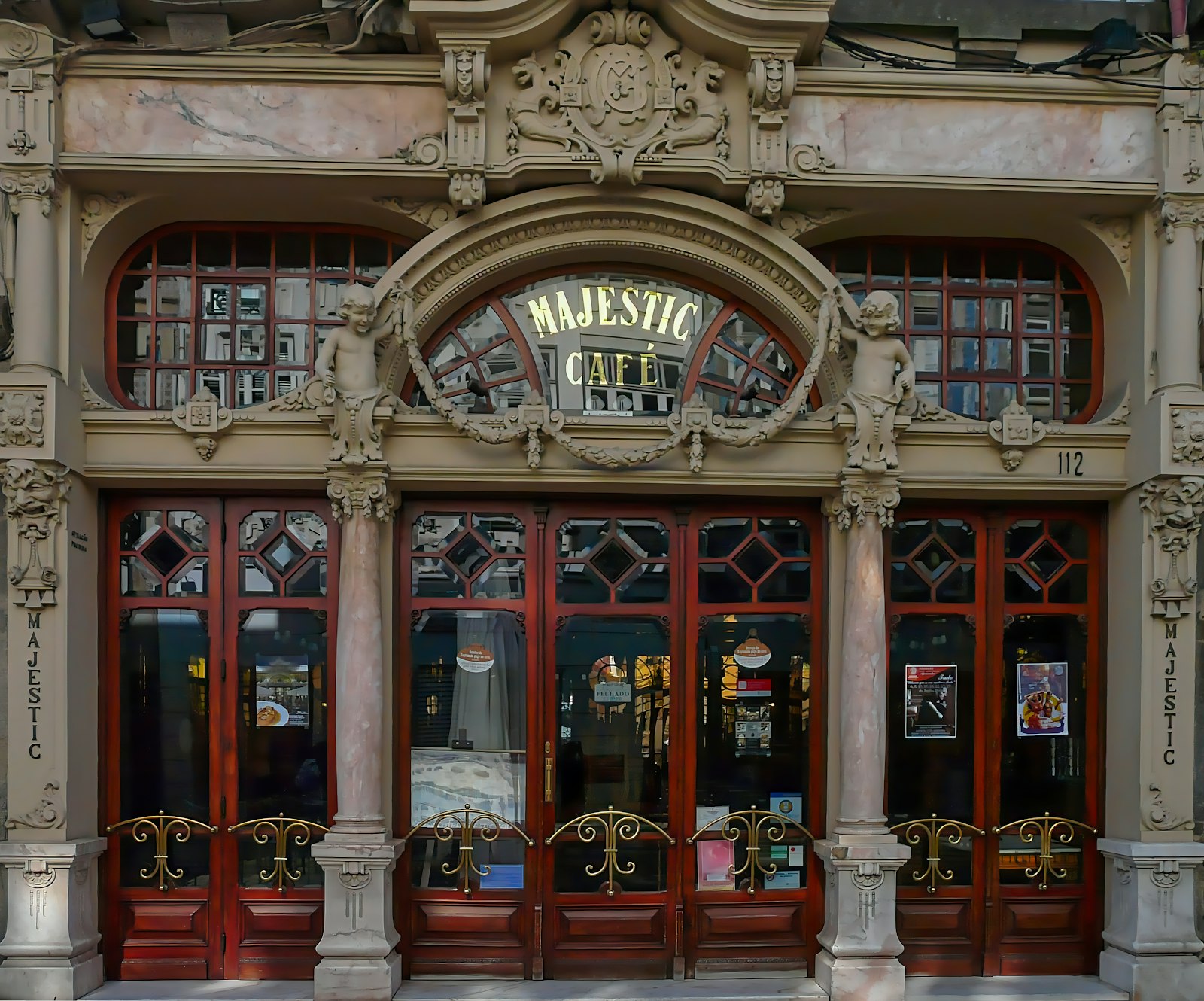
Behind an ornate façade on one of Porto's main shopping streets hides one of the loveliest Belle Époque rooms in Iberia. Café Majestic opened in 1921 and has kept its art nouveau splendour intact: carved wood panelling, great gilt-framed mirrors facing each other down the length of the room, cherubs, leather banquettes, and a warm, amber light that makes the whole place glow like the inside of a violin.
In its early days it drew Porto's artists and intellectuals, and it still carries that unhurried, slightly theatrical air. It is the kind of room where ordering a simple coffee and a custard tart feels like a small occasion, and where the reflections in the facing mirrors seem to stretch the café into the past and the future at once.
It gets busy, and it isn't cheap, but it rewards a slow visit. Come mid-morning before the day heats up, sit where you can see yourself repeated in the mirrors, and pair your coffee with a pastel de nata and a little people-watching.
6. Els Quatre Gats, Barcelona, Spain
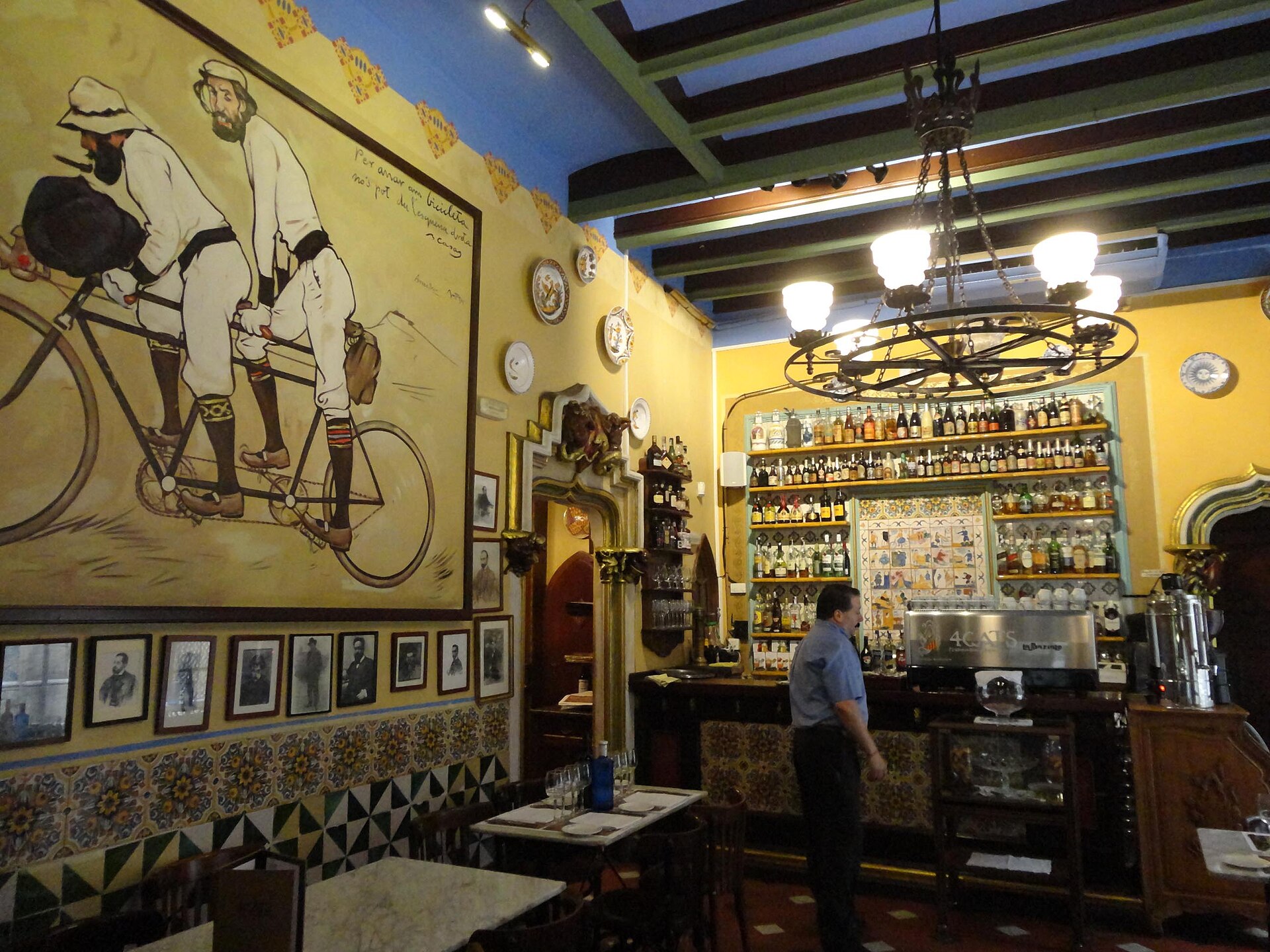
Tucked into a Modernista building in Barcelona's old town, Els Quatre Gats, the Four Cats, is a café soaked in artistic legend. Opened in 1897 as a tavern and gathering place for the city's bohemians, it became the haunt of a young Pablo Picasso, who held his very first solo exhibition here and even designed the artwork for its menu. The interior is a warm jumble of arches, wrought iron, dark wood, and paintings, exactly the sort of place where a movement gets started over cheap wine.
The name comes from an old Catalan expression meaning only a handful of people, a wry joke about how few customers it might attract, which turned out to be spectacularly wrong. Today it's a café and restaurant that still trades happily on its bohemian past, and the atmosphere remains genuinely charming.
Come for a coffee or a light lunch outside the busiest hours, take a moment to look at the reproductions of the old artwork, and enjoy sitting in a room where the history of modern art quietly took one of its early breaths.
7. Antico Caffè Greco, Rome, Italy
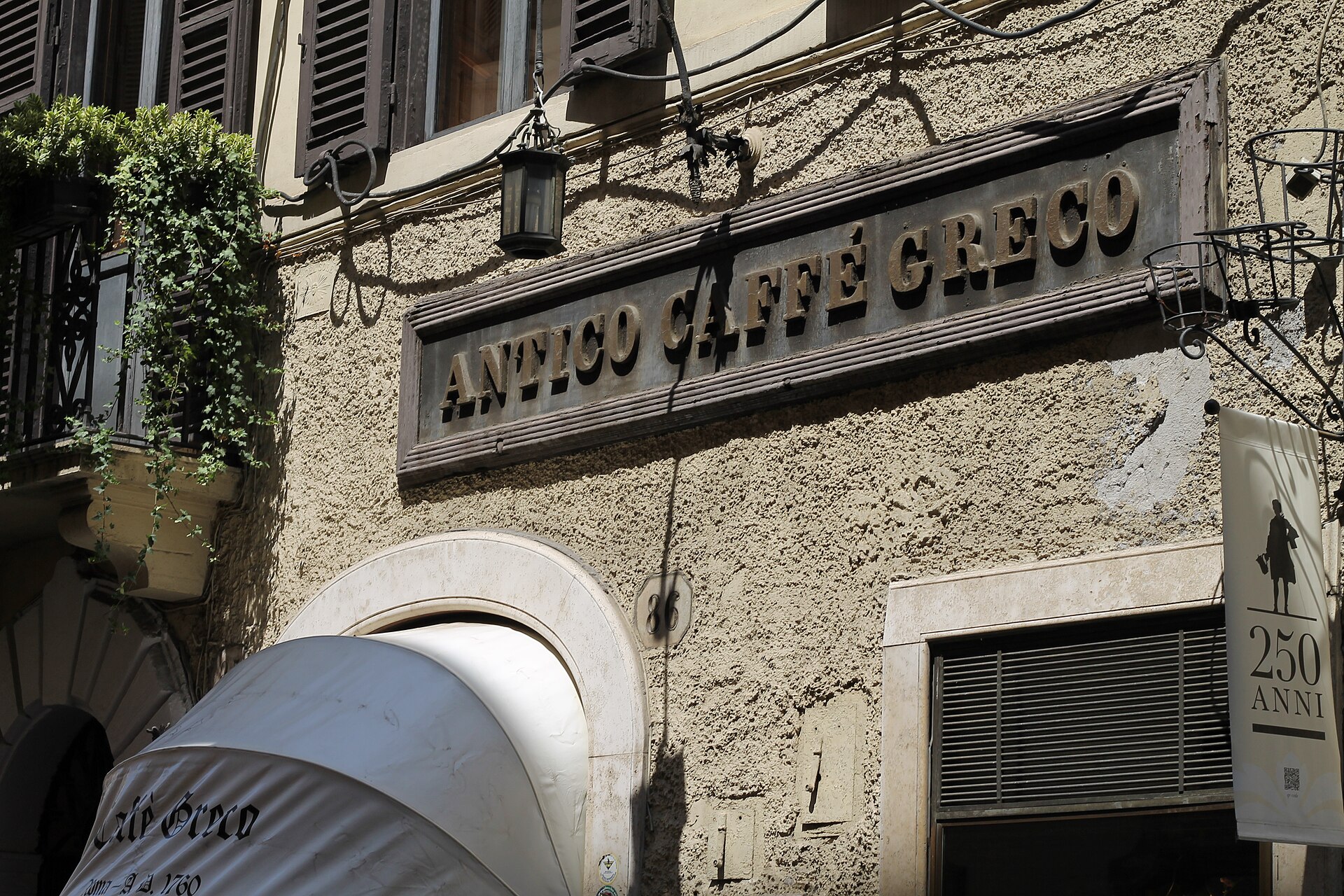
Just off the Spanish Steps, behind a modest door on a luxury shopping street, waits the oldest café in Rome. Antico Caffè Greco opened in 1760, and its narrow warren of small red-velvet rooms is hung frame to frame with paintings, mirrors, and marble busts, a private-gallery hush that feels a world away from the street outside. For more than two and a half centuries it has drawn artists and writers: Keats and Byron, Goethe and Casanova, Stendhal and countless others took their coffee here.
The rooms are small and gorgeously cluttered, the waiters in black tie, the marble tabletops worn smooth by generations of elbows. It is less a café than a living museum you are allowed to drink an espresso inside, and the sense of continuity with the past is remarkable.
Stand at the ornate bar for a quick, more affordable espresso in the Roman way, or take a table in the back rooms to properly soak up the paintings and the quiet. Either way, come to feel the centuries, not to hurry.
8. Café Tortoni, Buenos Aires, Argentina
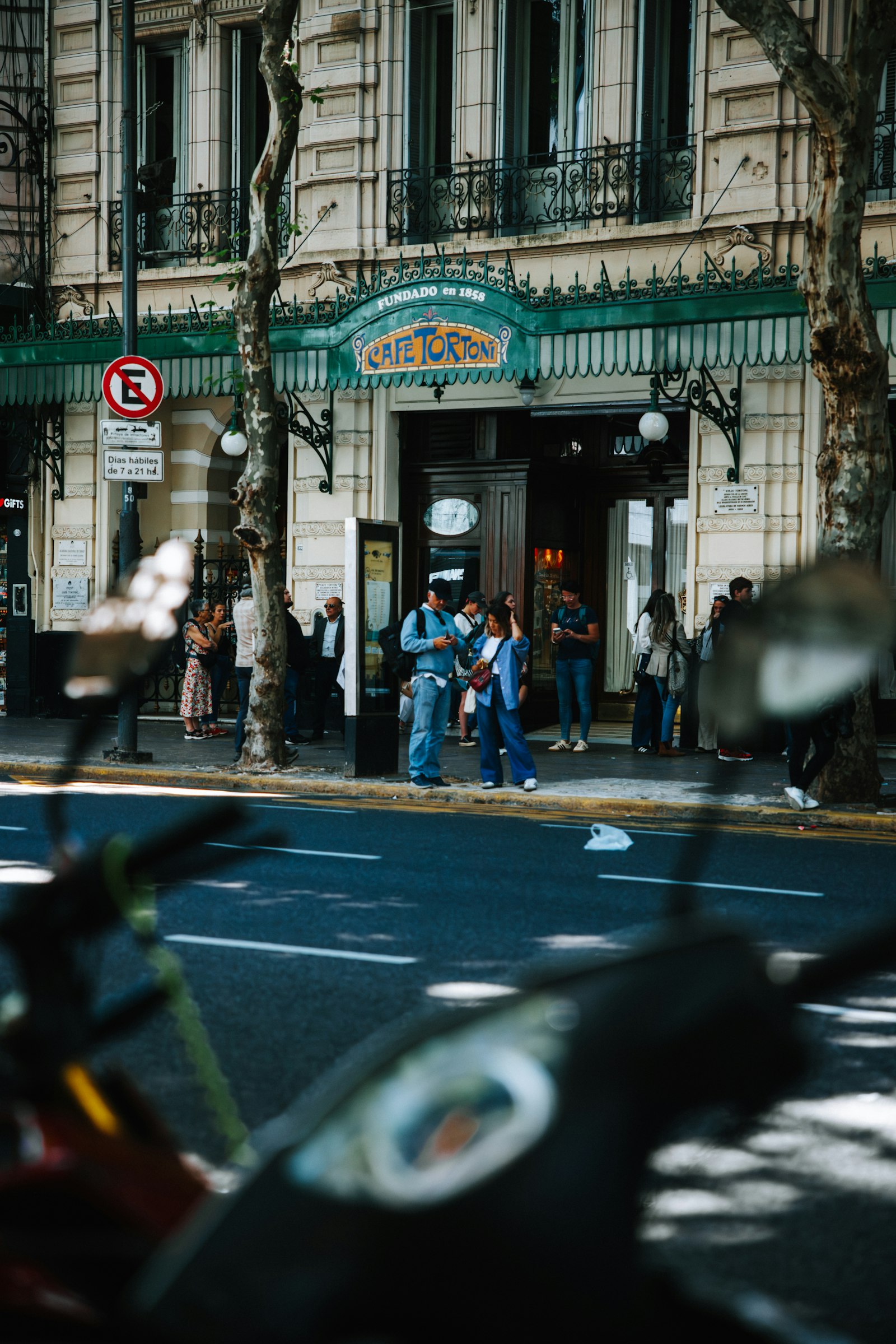
The atlas leaves Europe now, but not the Belle Époque. Café Tortoni, opened in 1858, is the grand old dame of Buenos Aires, a long, high room of marble columns, stained glass, dark wood, and old marble-topped tables that has barely changed in over a century. It was the meeting place of the city's writers, artists, and musicians, and its walls are crowded with their portraits and mementoes, from the poet Borges to the tango legend Carlos Gardel.
Downstairs, in an intimate back room, tango shows still play out most evenings, the music and the setting perfectly matched. Upstairs, the café hums along as it always has, a place to linger over coffee and churros dipped in thick hot chocolate, an Argentine ritual in its own right.
There is almost always a queue at the front door, so come off-peak, in the mid-morning or mid-afternoon lull. Order the coffee and churros, take in the portraits, and if you can, book ahead for one of the evening tango sessions in the back.
9. Confeitaria Colombo, Rio de Janeiro, Brazil
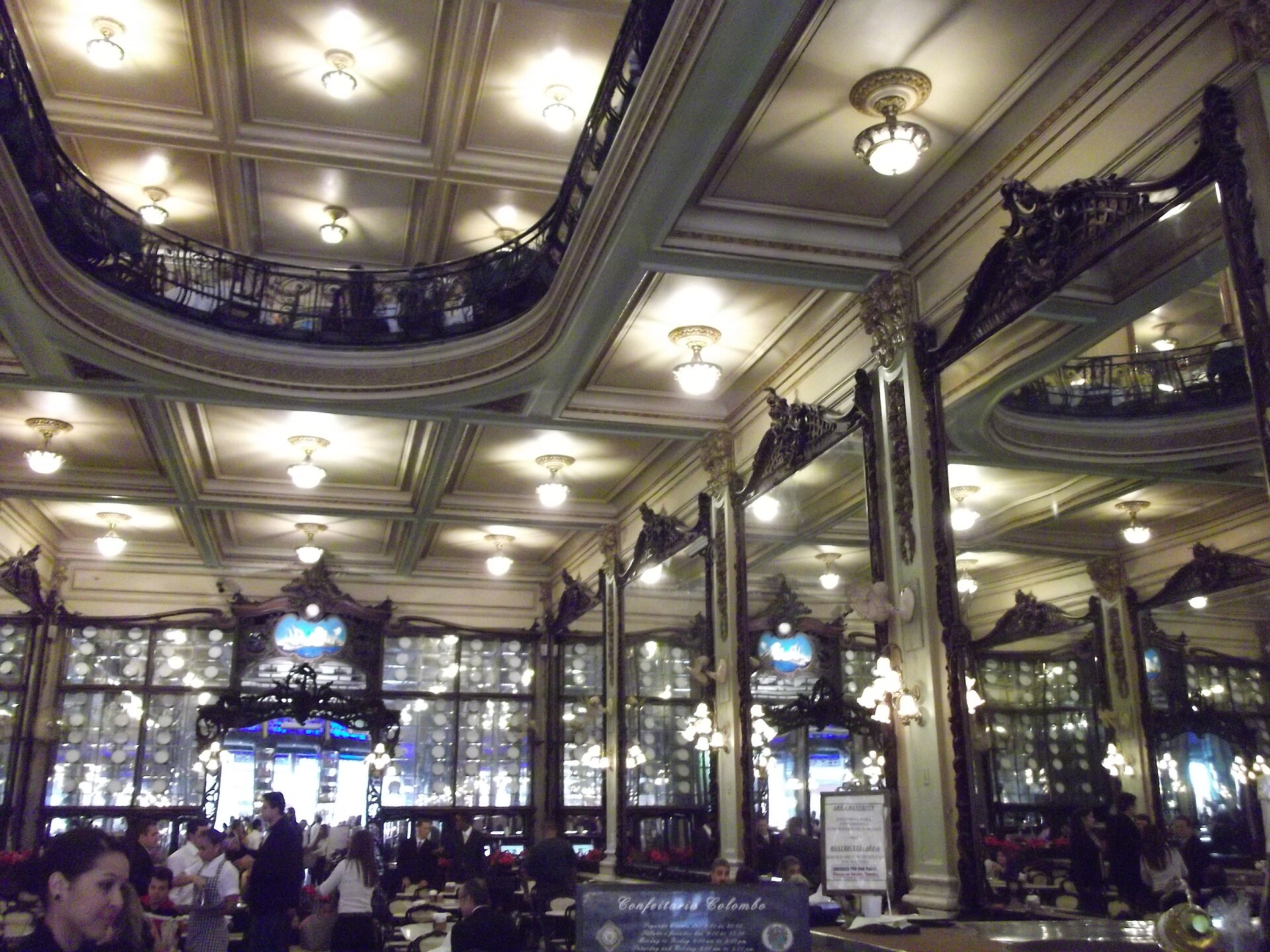
In the heart of old Rio stands a café so grand it feels transported whole from Belle Époque Paris. Confeitaria Colombo opened in 1894, and its main hall is breathtaking: enormous mirrors from Belgium reaching almost to the ceiling, dark jacaranda-wood counters, marble tabletops, and a vast stained-glass skylight bathing everything in soft, coloured light. It became the favourite gathering place of Rio's high society, artists, and politicians, and something of its old glamour still lingers over every table.
Upstairs and down, the café serves elaborate cakes and pastries and a famous afternoon tea, all under that jewelled skylight. To sit here is to feel a century of Rio's elegance folded into a single room, an unexpected pocket of European opulence in the tropical city.
Come for a mid-afternoon coffee and a pastry, when the light through the skylight is at its best, and take a moment to look up: the ceiling is as much the attraction as anything on the menu.
10. Café Riche, Cairo, Egypt
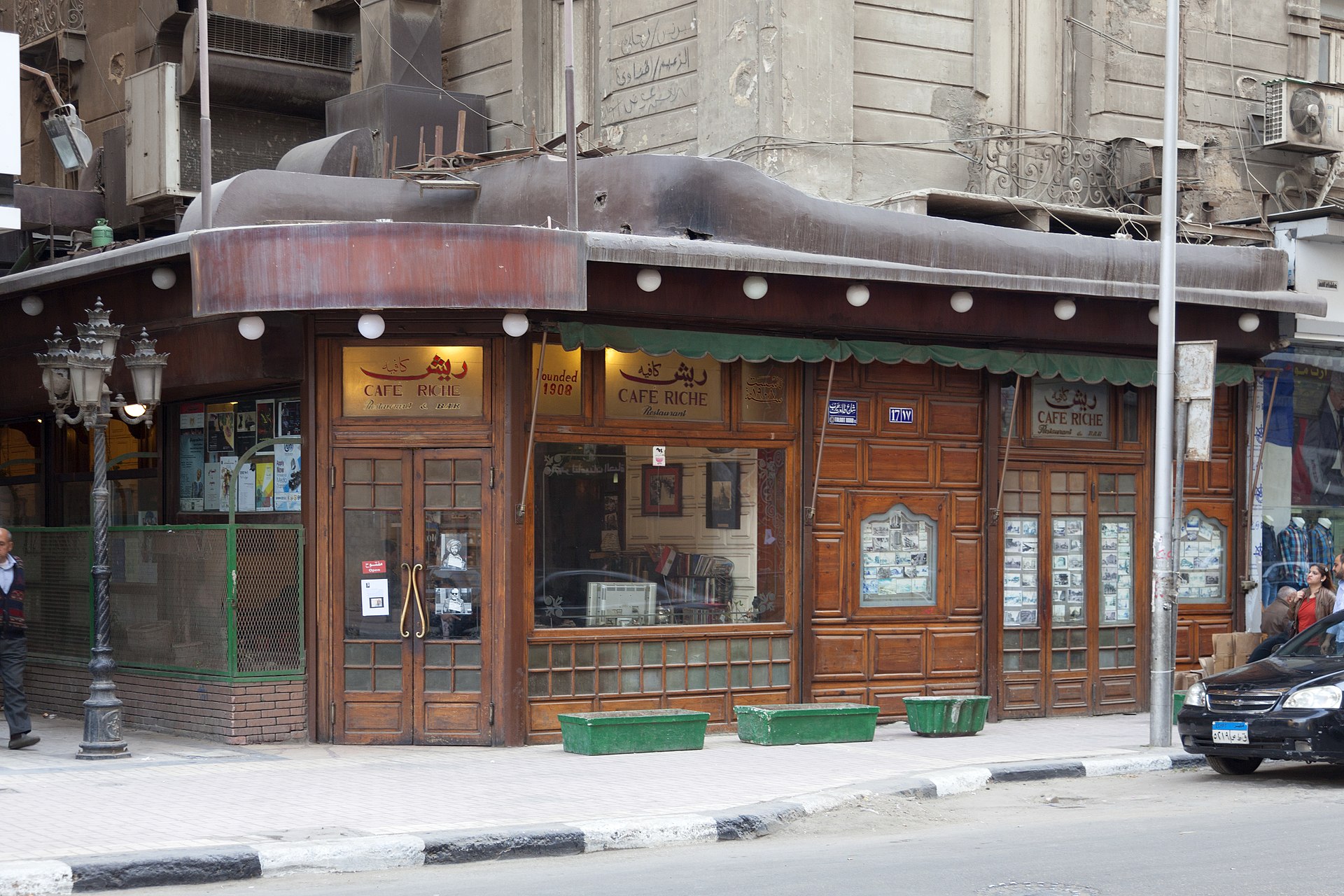
Behind an unassuming front in downtown Cairo hides one of the most storied cafés in the Arab world. Café Riche opened in the early twentieth century and became the beating heart of the city's intellectual life, a smoky gathering place for writers, artists, and political thinkers across a turbulent century. Its most famous regular, the Nobel laureate Naguib Mahfouz, drew on its tables and characters for his fiction, and revolutionaries are said to have met and plotted in its back rooms.
The interior is all warm old wood, arched doorways, and walls crowded with black-and-white photographs of the poets, singers, and dissidents who made it their second home. It is worn, atmospheric, and thick with the sense of history actually made rather than merely displayed, less a showpiece than a survivor.
This is a café to visit slowly and respectfully, ideally with a little of its story in mind. Come for a Turkish coffee, take in the photographs, and let the walls tell you about a whole century of a great city's arguments.
11. Café Slavia, Prague, Czech Republic
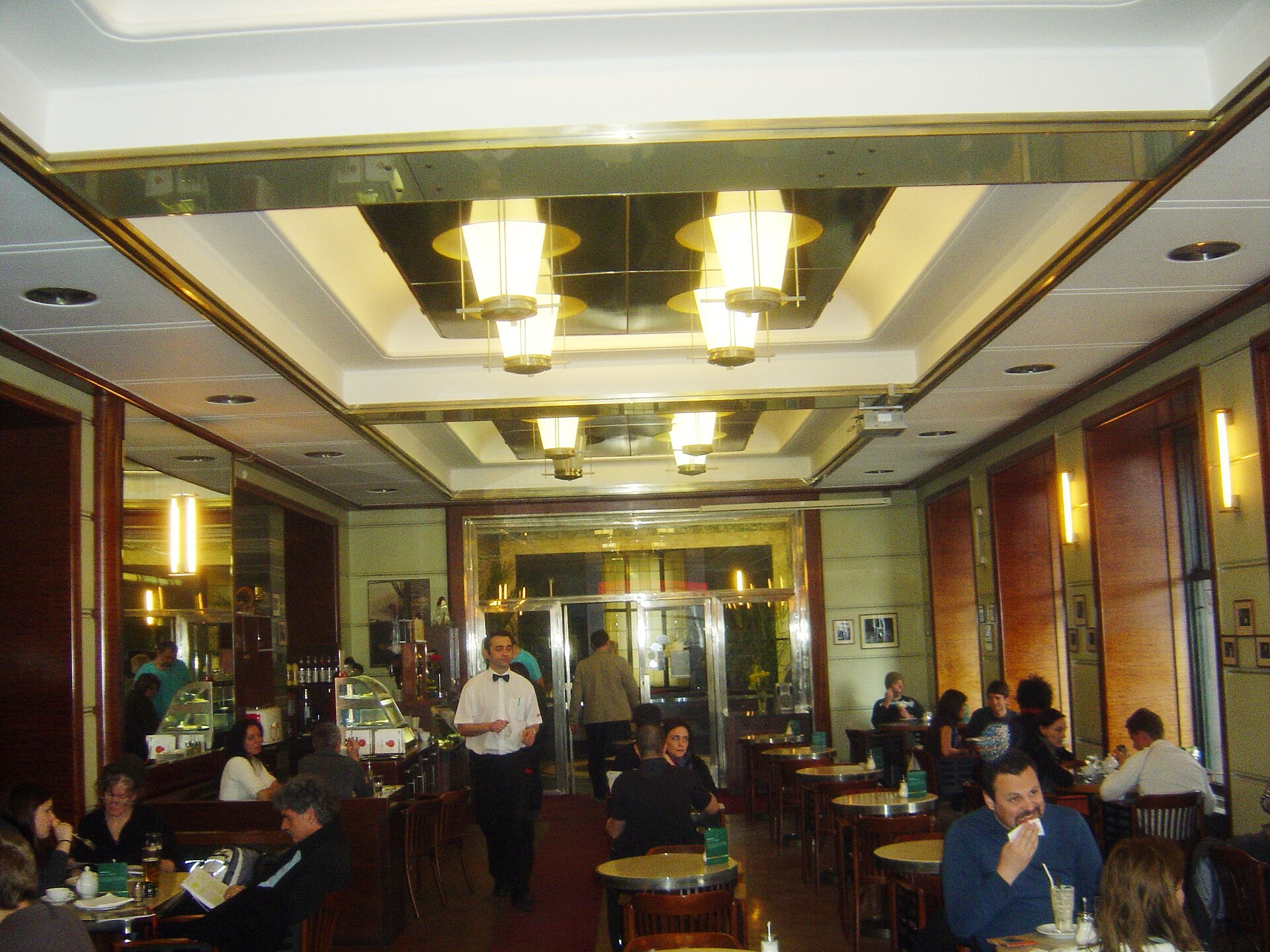
On a corner by the Vltava, with big windows framing the river, the National Theatre, and the castle on the hill beyond, Café Slavia has one of the loveliest views of any café in Europe. Opened in 1884, its cool, elegant Art Deco room became a legendary meeting place for Prague's writers, dissidents, and artists, among them the poet Rilke and the playwright turned president Václav Havel, who kept its tables buzzing through some of the country's darkest and most hopeful years.
Above one of the tables hangs a famous painting of an absinthe drinker, a nod to the café's slightly bohemian, melancholy soul. But the real draw is that river view: the trams rattling past, the theatre lit gold at night, the castle floating above it all as you sit warm inside with a coffee.
Come at dusk, when the lights come on across the water and the whole scene turns cinematic. Ask for a window table looking toward the theatre and the castle, order a coffee or a glass of wine, and watch Prague put on its evening face.
12. Café de l'Ambre, Tokyo, Japan
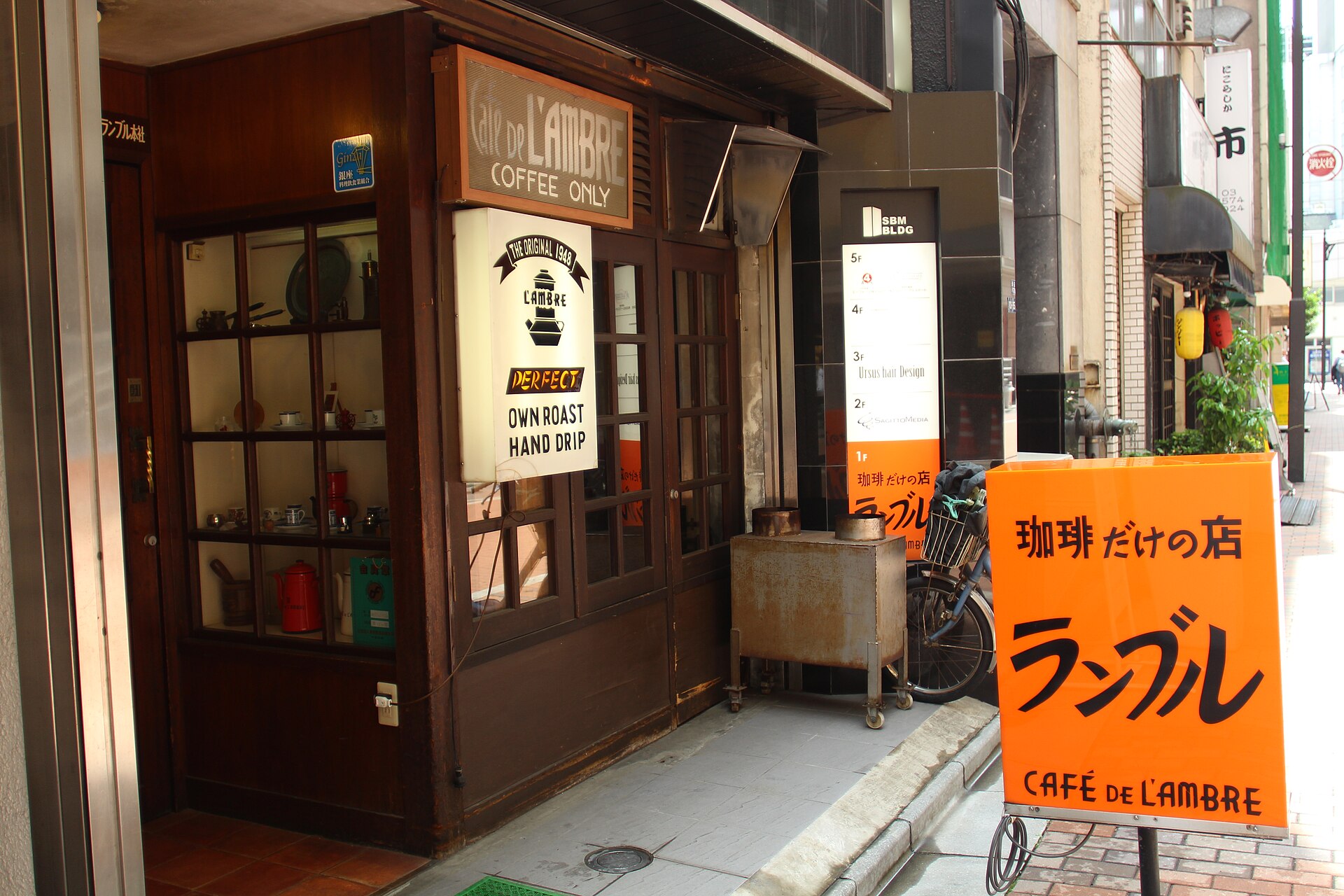
To end, something smaller and stranger. In the Ginza district of Tokyo hides a tiny, dimly lit coffee house devoted, with almost monastic seriousness, to a single thing: coffee. Café de l'Ambre opened in 1948 and belongs to the old Japanese tradition of the kissaten, the quiet, wood-panelled coffee house built for slow contemplation. Its late founder, who kept roasting well past his hundredth birthday, was famous for ageing green coffee beans for years, even decades, like fine wine.
There is no grand hall here, no chandeliers, just a narrow counter, a scatter of small tables, worn wood darkened by decades of smoke and steam, and a hushed, reverent focus on the cup in front of you. A master brews each coffee by hand, and you drink it slowly, the way it is meant to be drunk. It is enchantment of a completely different order: intimate, exacting, and quietly perfect.
Go in the afternoon, sit at the counter if you can, and let the barista guide you, perhaps to one of the aged beans the café is famous for. Order little, stay a while, and treat it as the meditative ritual it is.
Where to start
If you can only visit one, let it be the one that surprises you: Confeitaria Colombo for its jewelled skylight far from Paris, Café Riche for the sense of a century of history made around its tables, or Café de l'Ambre for the quiet perfection of a single, ageless cup. And if you want the icons, take an off-season morning at Caffè Florian or an afternoon beneath the frescoes of the New York Café, and simply refuse to hurry.
The enchantment of these cafés isn't only in the marble and the mirrors and the gilded ceilings. It's in the moment you sit down, let the coffee arrive, and feel a whole century of conversation settle quietly around you, as if you'd always had a table there.
Keep wandering through the Hidden Cafés & Enchanted Corners collection for more, or tell us the enchanting café we missed. That's the fun of an atlas. It's never quite finished.
Keep exploring
The Most Enchanting Cafés & Beer Bars in Belgium
Belgium's real magic hides in its brown cafés and old beer bars, from a Bruges pub open since 1515 to a Brussels den where the surrealists once drank.
The Most Enchanting Castles in Belgium
Belgium hides a startling number of storybook castles, from a six-towered fairytale keep near Dinant to a moated brick fortress on the edge of Brussels.
The Most Whimsical Cities in Belgium
A storybook shortlist for a trip through Belgium, from the canals of Bruges to a town squeezed between a cliff and a river, and the tiny place that calls itself the smallest city in the world.