12 Whimsical Cities That Feel Like Stepping Into a Storybook
Photo: Alexander Van Steenberge / UnsplashMost cities are built for getting things done: grids, glass, traffic, hurry. And then there are the other kind, the ones with spires instead of skylines and canals instead of ring roads, where the lanes wander, the rooftops tilt, and turning a corner feels like turning a page. This is a field guide to that second kind, the cities that feel less like somewhere you visit and more like a picture book you get to walk around inside.
You'll know one or two of these; a great whimsical-cities list would feel incomplete without them. But the real joy of this atlas is what comes after the famous few, the medieval old towns and painted hillside ports that most travel guides only mention in passing. Skip the obvious, and the magic gets quieter, stranger, and entirely your own.
Here are twelve cities that feel like stepping into a storybook, from the icons to the deep cuts, and how to catch each one at its most enchanting.
1. Prague, Czech Republic
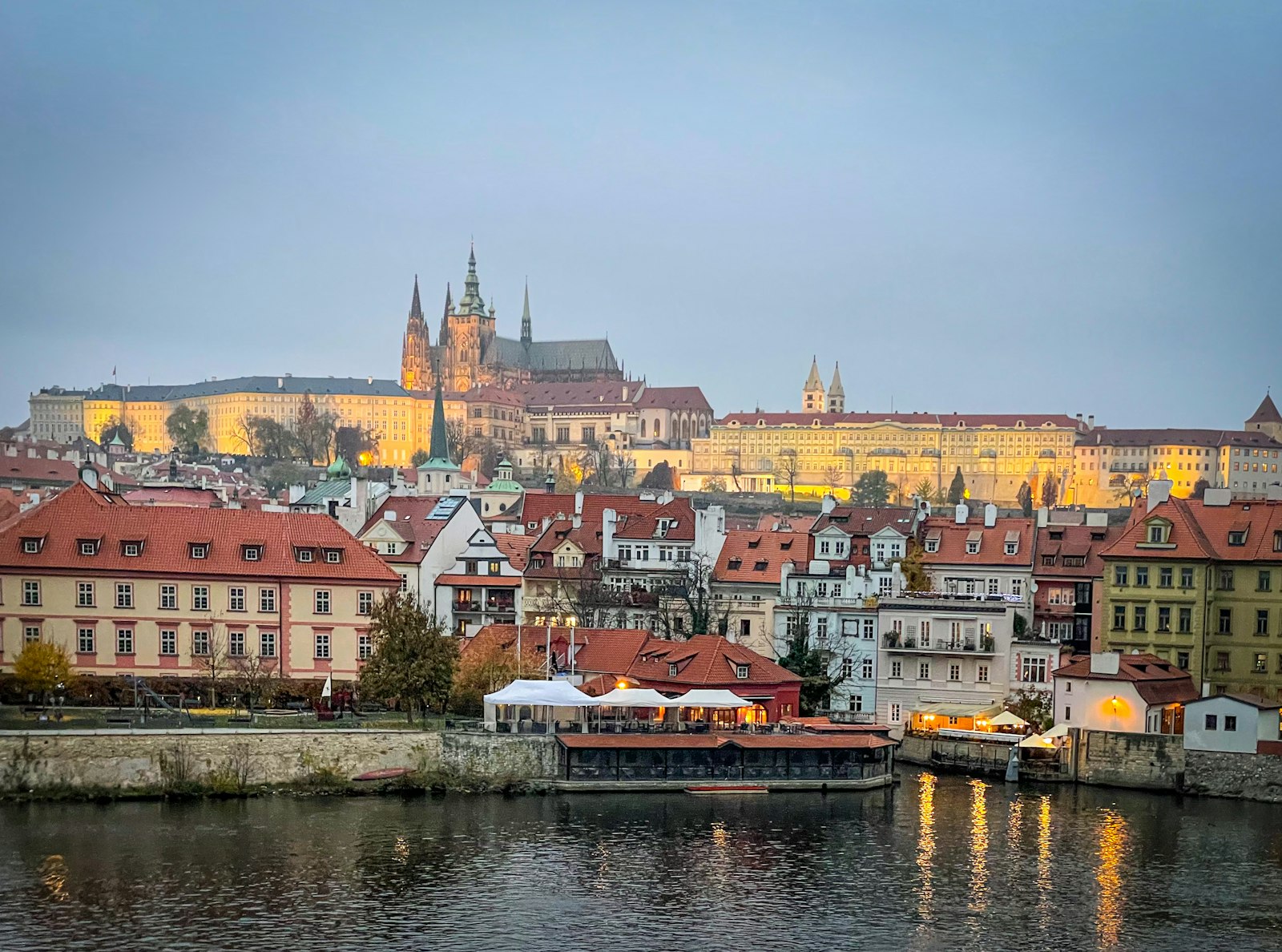
The city of a hundred spires, and the one most people picture when they imagine a fairytale come to life. Prague piles up along the Vltava in a jumble of red rooftops, gothic towers, baroque domes, and a castle on the hill that has watched over it all for a thousand years. Cross the statue-lined Charles Bridge at dawn, before the crowds, and the whole scene glows amber in the low light, mist rising off the river beneath you.
Down in the old town, the lanes twist past pastel façades and hidden courtyards to a medieval square where, every hour, a crowd gathers to watch the astronomical clock work its centuries-old mechanical theatre. It is a city that has inspired writers and dreamers for generations, all winding alleys and unexpected sculpture and a faint air of the uncanny.
Prague is deservedly popular, so timing is everything. Walk the bridge and the castle district at first light or late evening, when the day-trippers thin, and give yourself time to get lost in the smaller streets of the Malá Strana quarter, where the fairy tale is quietest and most complete.
2. Bruges, Belgium
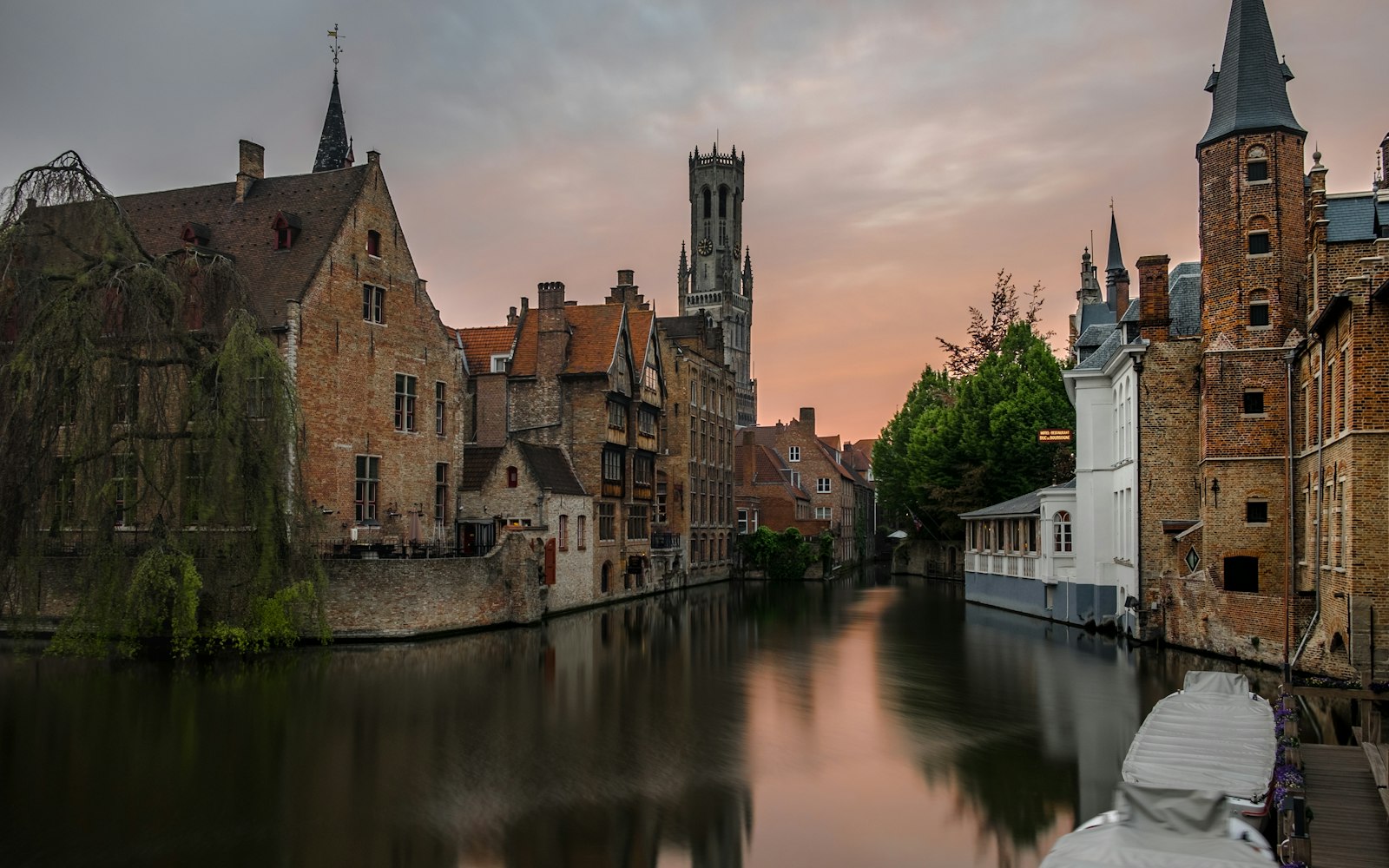
If a city could be a music box, it would be Bruges. The old Flemish town is threaded with quiet canals and crossed by little humpbacked bridges, its stepped-gable houses leaning over the water and a great medieval belfry presiding over the market square. Almost perfectly preserved, it looks less like a living city than a model of one, kept under glass since the Middle Ages.
Horse-drawn carriages clip over the cobbles, swans drift on the canals, and the smell of chocolate and waffles drifts out of shopfronts. It is unashamedly pretty, the kind of place that has launched a thousand marriage proposals, and beneath the postcard surface it is a genuinely old and atmospheric town of almshouses, béguinages, and lamplit lanes.
The secret, as ever, is to outlast the day-trippers. Stay overnight, and once the coaches leave the canals and squares turn hushed and golden. Climb the belfry for the view over the rooftops, then wander the quieter northern canals, where you can often have a bridge and its reflection entirely to yourself.
3. Edinburgh, Scotland
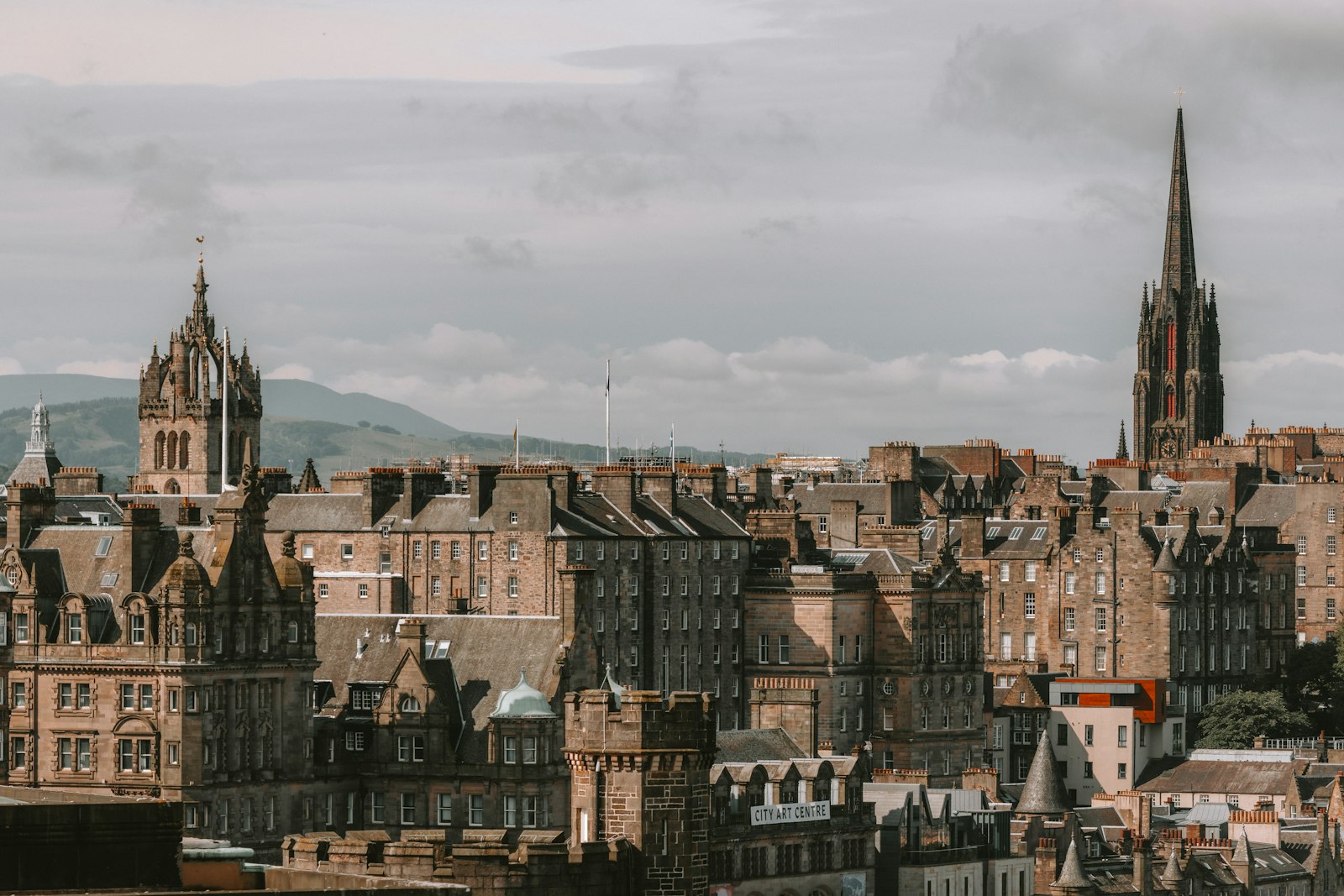
Few cities do atmosphere like Edinburgh. Its Old Town tumbles down a volcanic ridge in a tangle of steep closes and stone stairways, crowned by a castle on a black crag and shrouded, more often than not, in a soft grey haar rolling in off the sea. Tall tenements lean over hidden wynds, gargoyles peer down from the spires, and the whole place has a brooding, storybook magic that turns to full enchantment after dark.
It is a city steeped in stories, from its literary past to the writer who sketched parts of a certain young wizard's world in its cafés, and the steep, shop-lined curve of Victoria Street is often said to have helped inspire a certain magical shopping lane. Beneath the streets lie vaults and closes sealed for centuries, and above them a skyline of turrets and chimney pots straight out of a gothic fairy tale.
Come in the cooler months, when the mist and early dark suit the city best, and climb Calton Hill or Arthur's Seat for the classic look over the spires to the sea. Explore the Old Town's closes on foot in the evening, when the lamplight and shadows do the storytelling.
4. Porto, Portugal
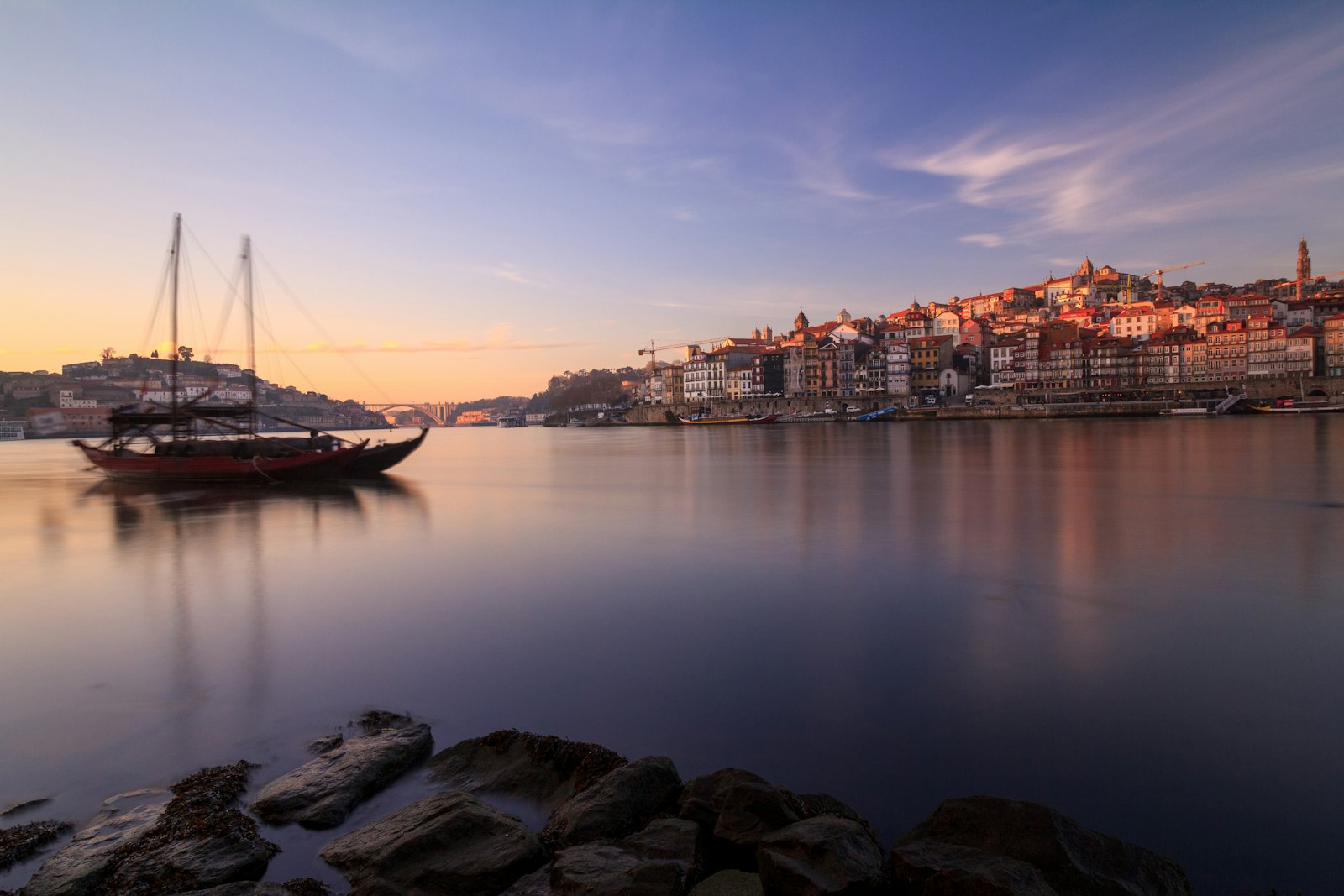
Porto spills down the banks of the Douro in a glorious, higgledy-piggledy cascade of pastel houses, terracotta roofs, and tiled façades, stacked so steeply that the streets seem to tumble over one another toward the river. Blue-and-white azulejo tiles cover churches and train stations, a great iron bridge arches over the water, and across the river the port lodges age their barrels in the sun. It is a city that feels warm, worn, and wonderfully romantic.
Wander uphill and you find a neo-gothic bookshop with a swooping crimson staircase so theatrical it draws readers from around the world, long rumoured to have sparked a famous author's imagination during her years living in the city. Everywhere there are tiled walls, wrought-iron balconies, and sudden views down alleys to the glittering Douro below.
Porto rewards slow, aimless wandering. Follow the lanes down to the riverside Ribeira district, cross the bridge at sunset when the whole hillside glows gold, and linger over a glass of port as the lights come on across the water.
And now the ones most travel guides never mention, the reason this atlas exists.
5. Tallinn, Estonia
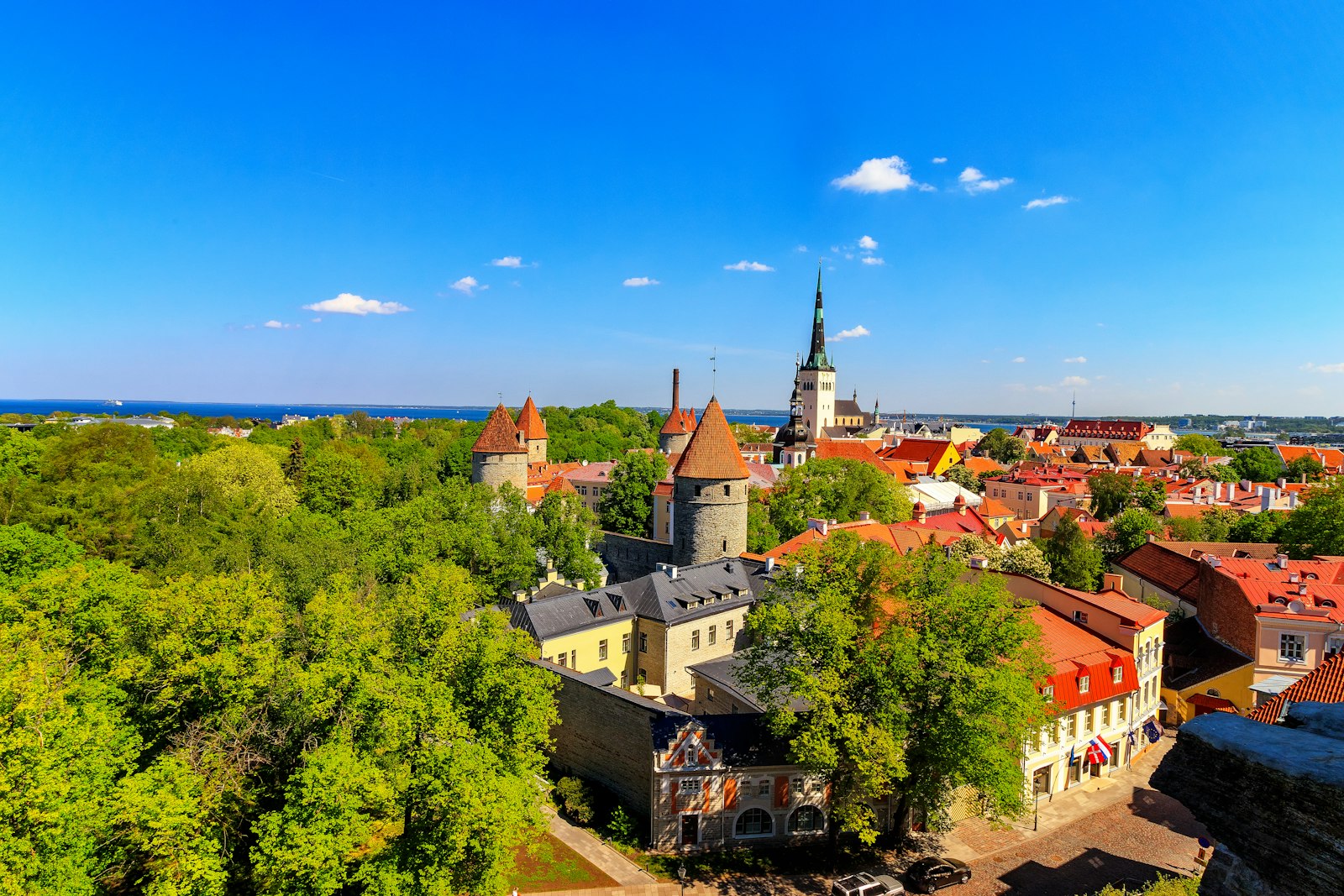
Tucked on the Baltic coast, Tallinn has one of the most complete medieval old towns in Europe, and stepping inside its walls feels like stepping straight into the Middle Ages. Cobbled lanes wind between merchants' houses painted in faded pastels, past guild halls and spires and a ring of round watchtowers still capped with their pointed red roofs. Long stretches of the old town wall still stand, and you can walk them.
It is the kind of place where every corner offers another storybook view: a hidden courtyard, a crooked staircase, a tower framing the sea. In winter, with snow on the rooftops and a Christmas market glowing in the town square beneath a giant tree, it tips fully into fairy tale.
Tallinn stays quieter than the great Western European old towns, which is part of its charm. Climb to the Toompea viewing platforms for the classic look over the red roofs and spires, walk a section of the walls, and lose an hour in the medieval lanes early in the morning before the day's visitors arrive.
6. Ljubljana, Slovenia
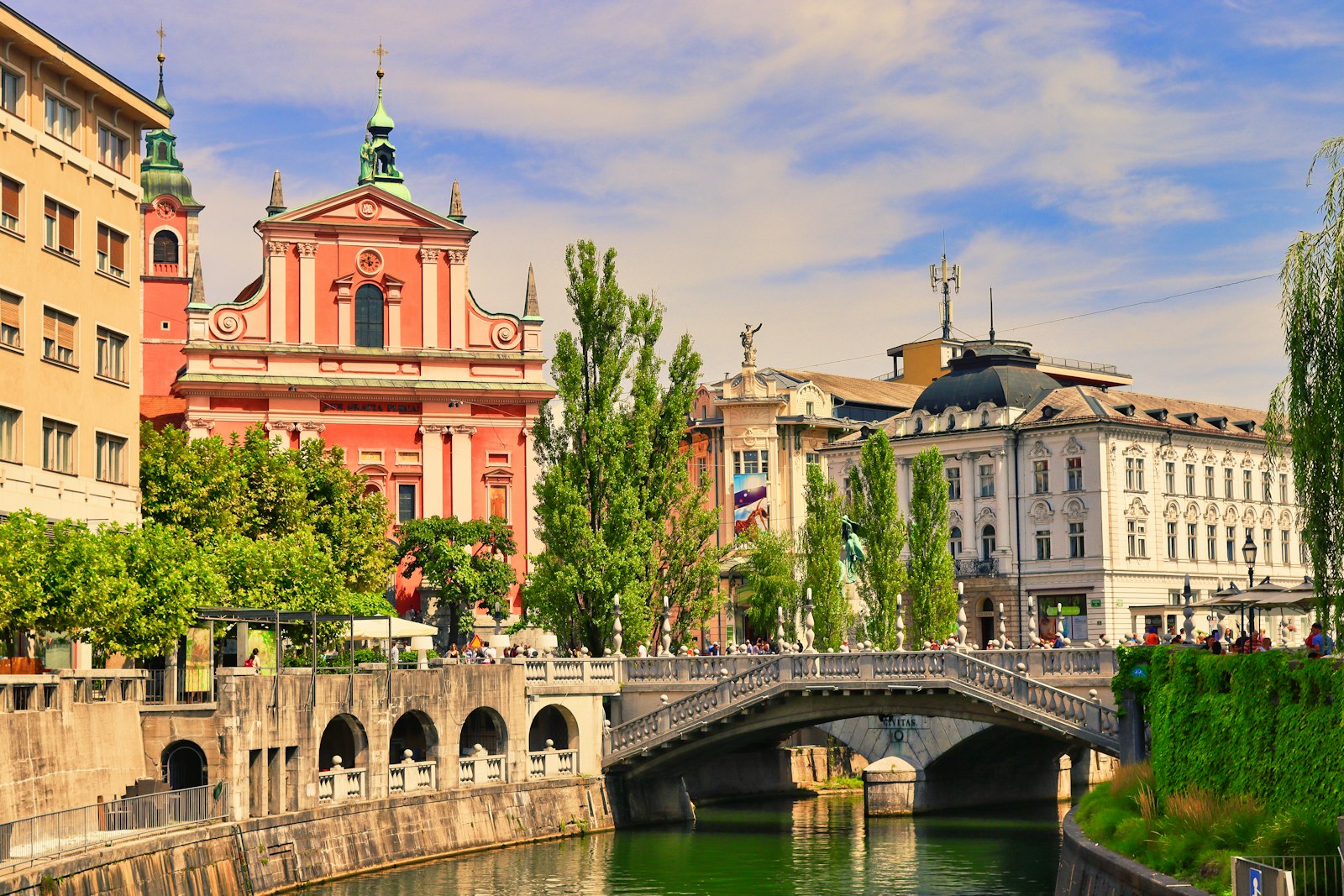
Small, green, and quietly enchanting, Ljubljana may be the most charming little capital in Europe that most people can't quite place on a map. A willow-lined river curls through the middle of it, crossed by elegant bridges, one of them guarded by four winged dragons, the creature that has become the city's beloved symbol. Above it all sits a castle on a wooded hill, reached by a woodland path or a funicular.
The old town is almost entirely car-free, so its riverside squares and pastel façades belong to pedestrians, buskers, and café tables spilling onto the cobbles. Much of its distinctive look comes from a single visionary architect whose bridges, balustrades, and colonnades give the whole city a graceful, storybook coherence.
This is a city made for slow days. Wander the riverbanks, browse the market, ride up to the castle for the view over the red roofs to the Alps beyond, and settle in at a riverside café to watch the dragons keep watch. It is loveliest in late spring and early autumn, when the café season is in full swing.
7. Ghent, Belgium
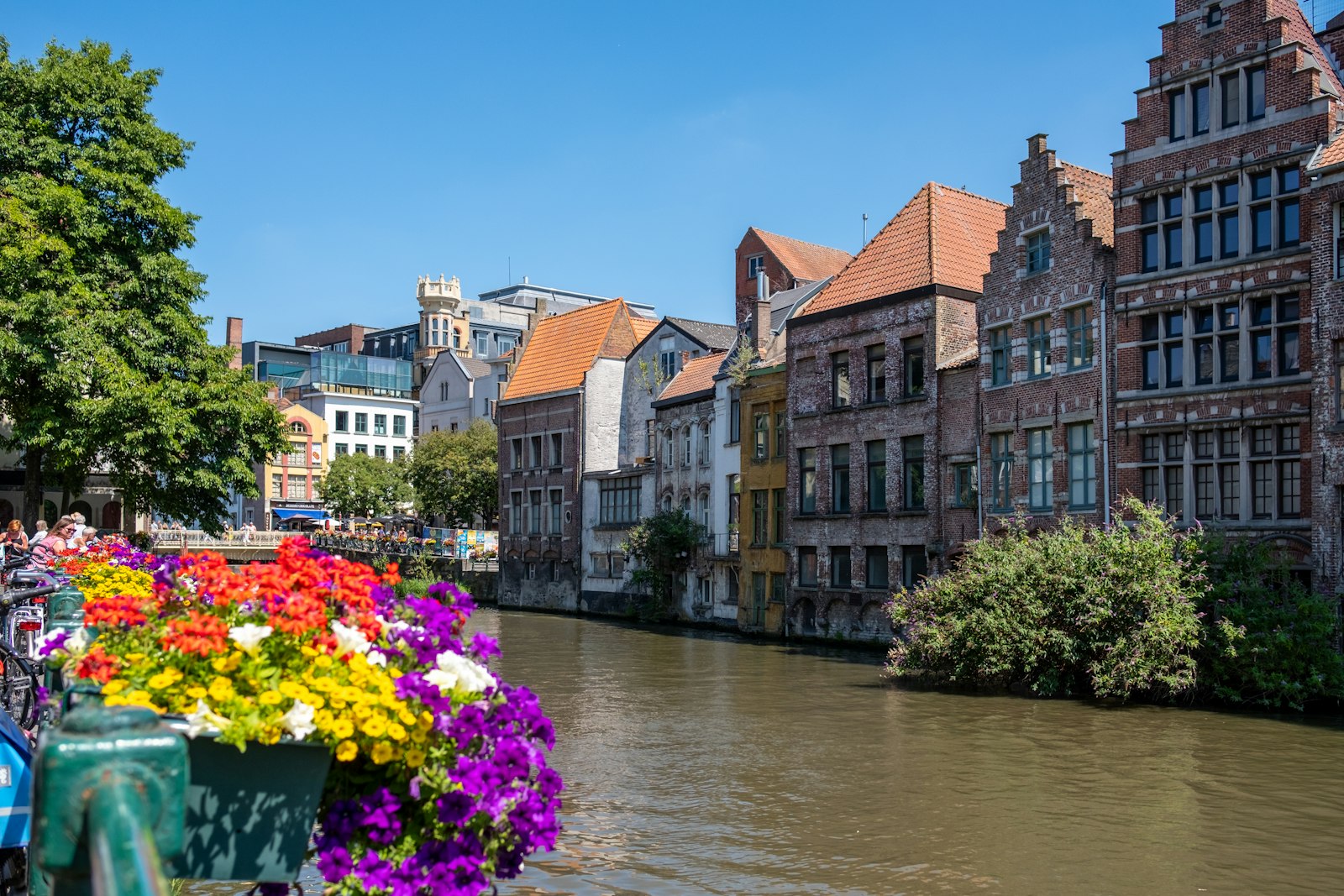
Bruges gets the crowds; Ghent gets the soul. Just down the road, this old Flemish city has all the medieval drama, stepped gables, waterfront guild houses, soaring towers, a proper moated stone castle in the middle of town, but a fraction of the tourists and a real, lived-in energy thanks to its big student population. The result is a storybook city that still feels like a working, breathing place.
The heart of it is the Graslei, a row of gorgeously ornate guild houses lining a medieval harbour, best seen from the water or the bridge at dusk when they light up and reflect in the canal. Nearby, the Gravensteen castle rises complete with turrets and battlements, and the skyline bristles with the towers of churches and the old belfry.
Come for the atmosphere Bruges can't quite offer any more: the sense of a beautiful old city that hasn't been turned into a museum of itself. Wander the waterfront in the evening, climb the belfry for the rooftop view, and enjoy having a genuinely magical Flemish city that far fewer people have on their list.
8. Bergen, Norway
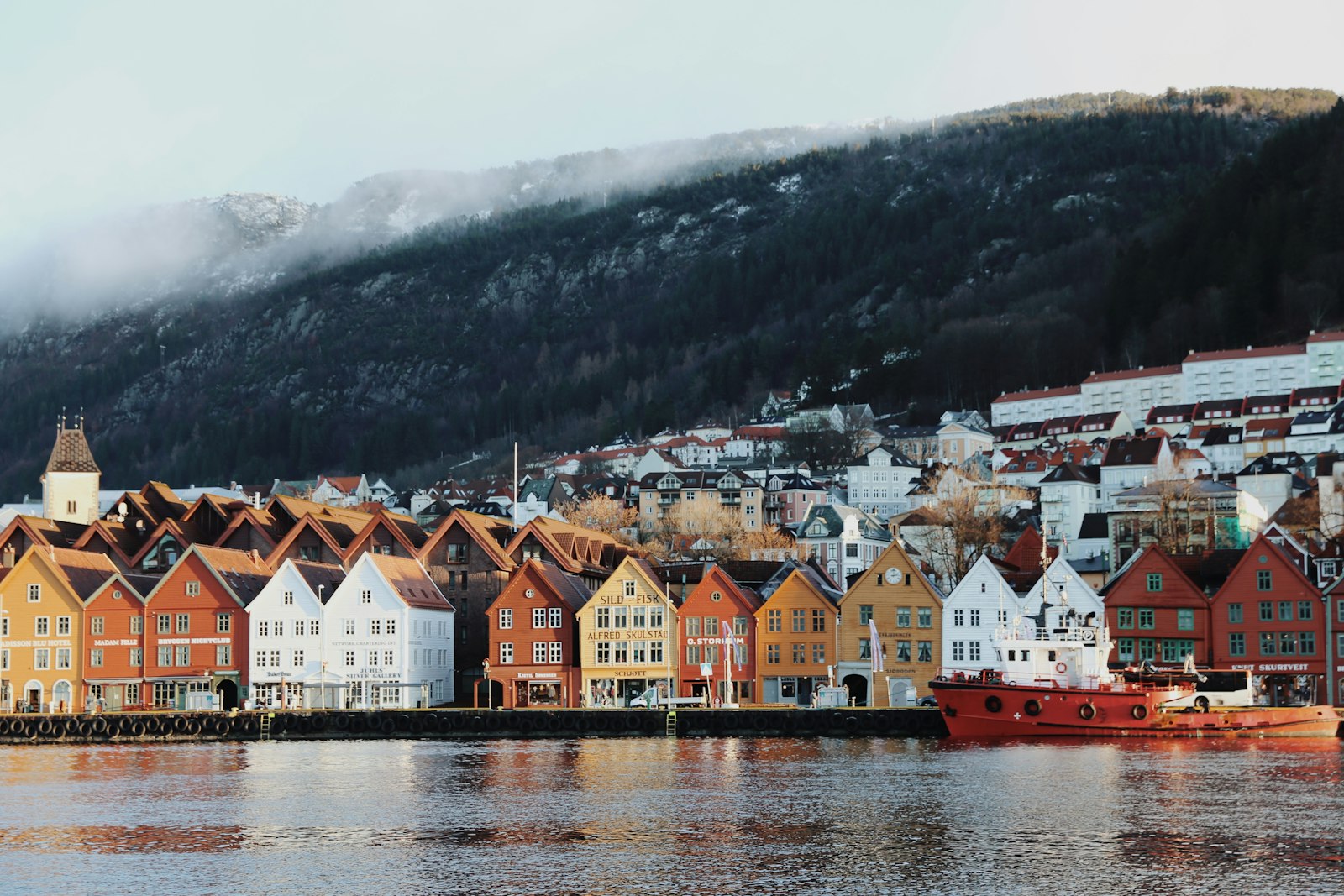
Set among seven hills and seven fjords on Norway's rugged west coast, Bergen is a city of brightly painted wooden houses, working harbours, and mountains that rise straight up behind the rooftops. Its old wharf, Bryggen, is a crooked row of tall timber merchants' houses in ochre, rust, and cream, leaning together along the water, a survivor of the old Hanseatic trading days and one of the most photogenic streetscapes in the north.
Behind the harbour, cobbled lanes climb the hillsides between white clapboard cottages and gardens, and a little funicular carries you up Mount Fløyen for a view over the whole colourful sprawl to the sea. It rains often here, but the wet only deepens the colours and the cosy, lamplit charm.
Bergen is also the gateway to the great fjords, so it makes a perfect storybook base for a wider Norwegian journey. Wander Bryggen's narrow wooden passages, ride up Fløyen at sunset, and embrace the rain as part of the mood, umbrella in one hand, cinnamon bun in the other.
9. Wrocław, Poland
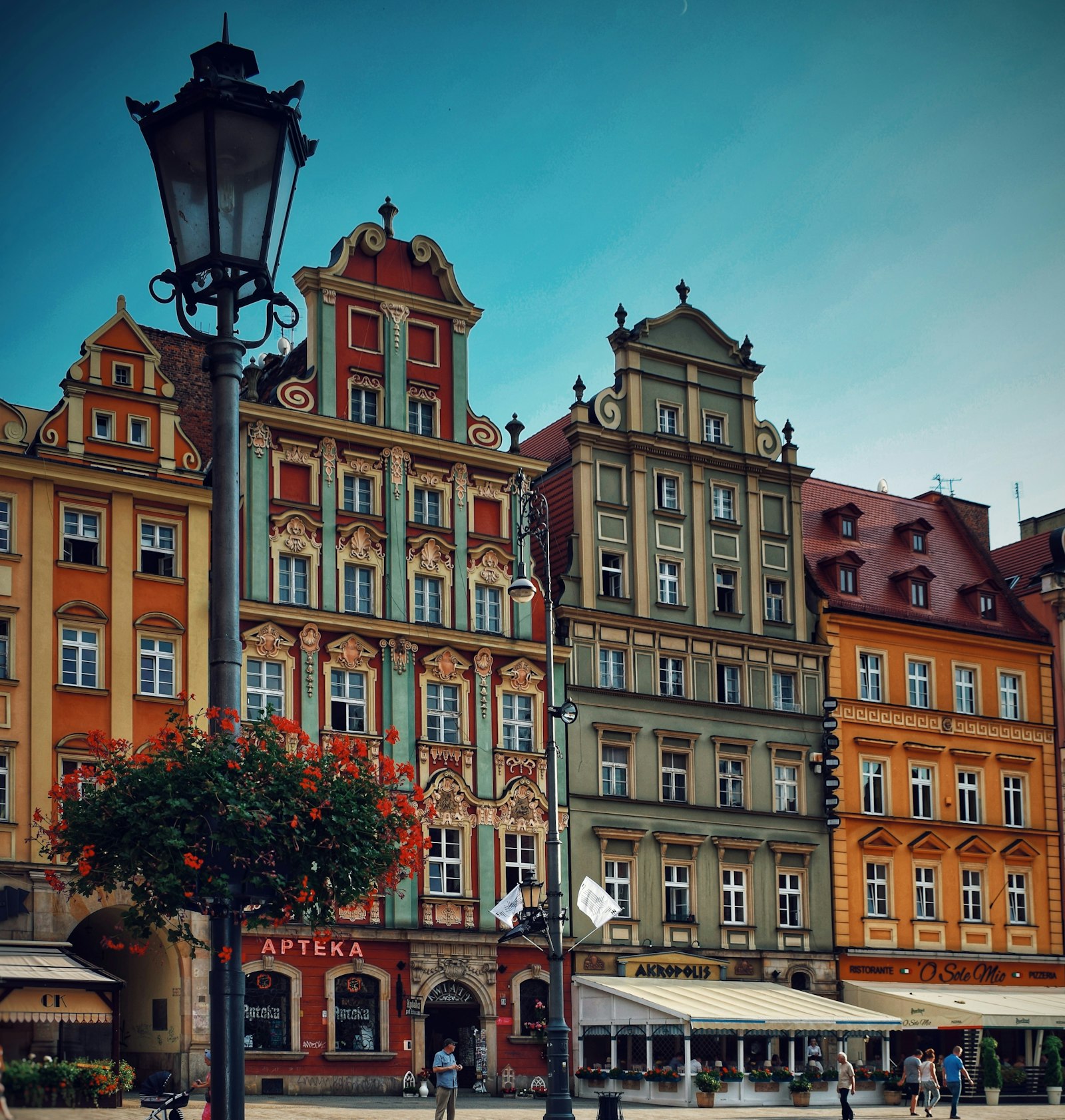
One of Poland's most beautiful and most underrated cities, Wrocław is built across a scatter of islands where the market square blazes with colour: tall, ornate merchant houses painted every shade of sherbet, wrapped around a soaring gothic town hall. Bridges link leafy islets, gas lamps are still lit by hand at dusk in one old quarter, and the whole place has a bright, good-natured, storybook charm.
Its most delightful secret is underfoot. Scattered all over the city are hundreds of tiny bronze dwarfs, no taller than a boot, going about their business on doorsteps, lampposts, and window ledges. Hunting for them has become a joyful game for visitors, and turns a simple walk through the centre into a treasure hunt with no map.
Wrocław is a wonderful, low-stress city to wander. Base yourself near the market square, spend an evening on the cathedral island when the lamplighter makes his rounds, and let yourself go dwarf-spotting through the old town. Far fewer travellers come here than to Kraków, which only adds to the pleasure.
10. Sibiu, Romania
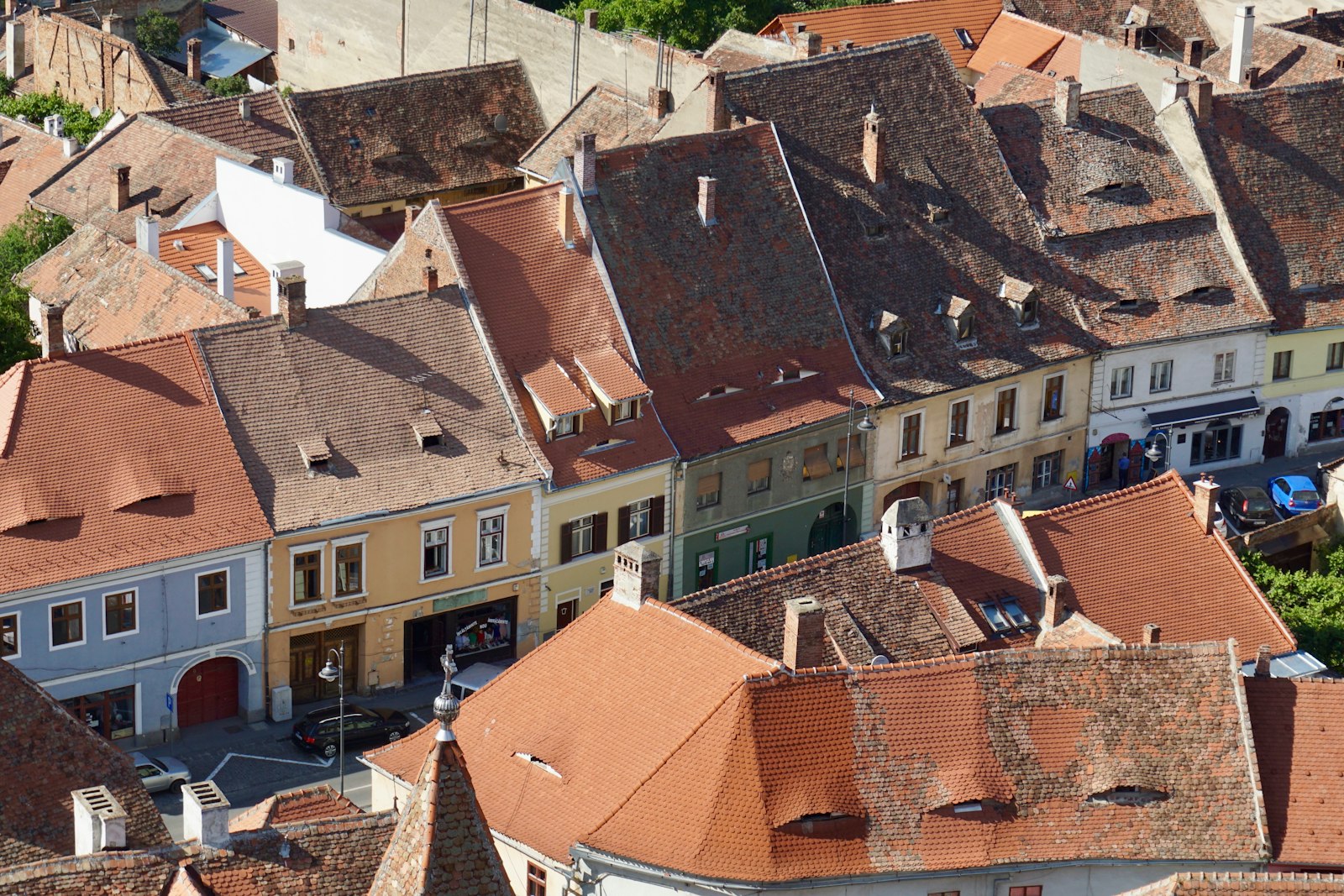
In the heart of Transylvania, the old Saxon town of Sibiu has a quirk that gives it a magic all its own: its rooftops seem to watch you. Set into the steep tiled roofs are small eyelid-shaped dormer windows, narrowed and drowsy, so that the pastel houses around the squares appear to gaze down with half-closed eyes. Once you notice the "eyes of Sibiu," you can't stop seeing them, and the whole town takes on the air of a place that is quietly, sleepily alive.
Built by German settlers centuries ago, Sibiu is a beautifully preserved tangle of cobbled squares, pastel façades, defensive towers, and passageways, linked by a photogenic covered footbridge with a superstition attached: the Bridge of Lies. Around it spread the wider Saxon lands of Transylvania, dotted with fortified churches and storybook villages.
This is deep, uncrowded Central Europe, and all the more magical for it. Wander the upper and lower towns, find the watching rooftops, and use Sibiu as a base to explore the fortified Saxon villages nearby. Come in the softer months, when the light is kind and the squares are lively with café tables.
11. Guanajuato, Mexico
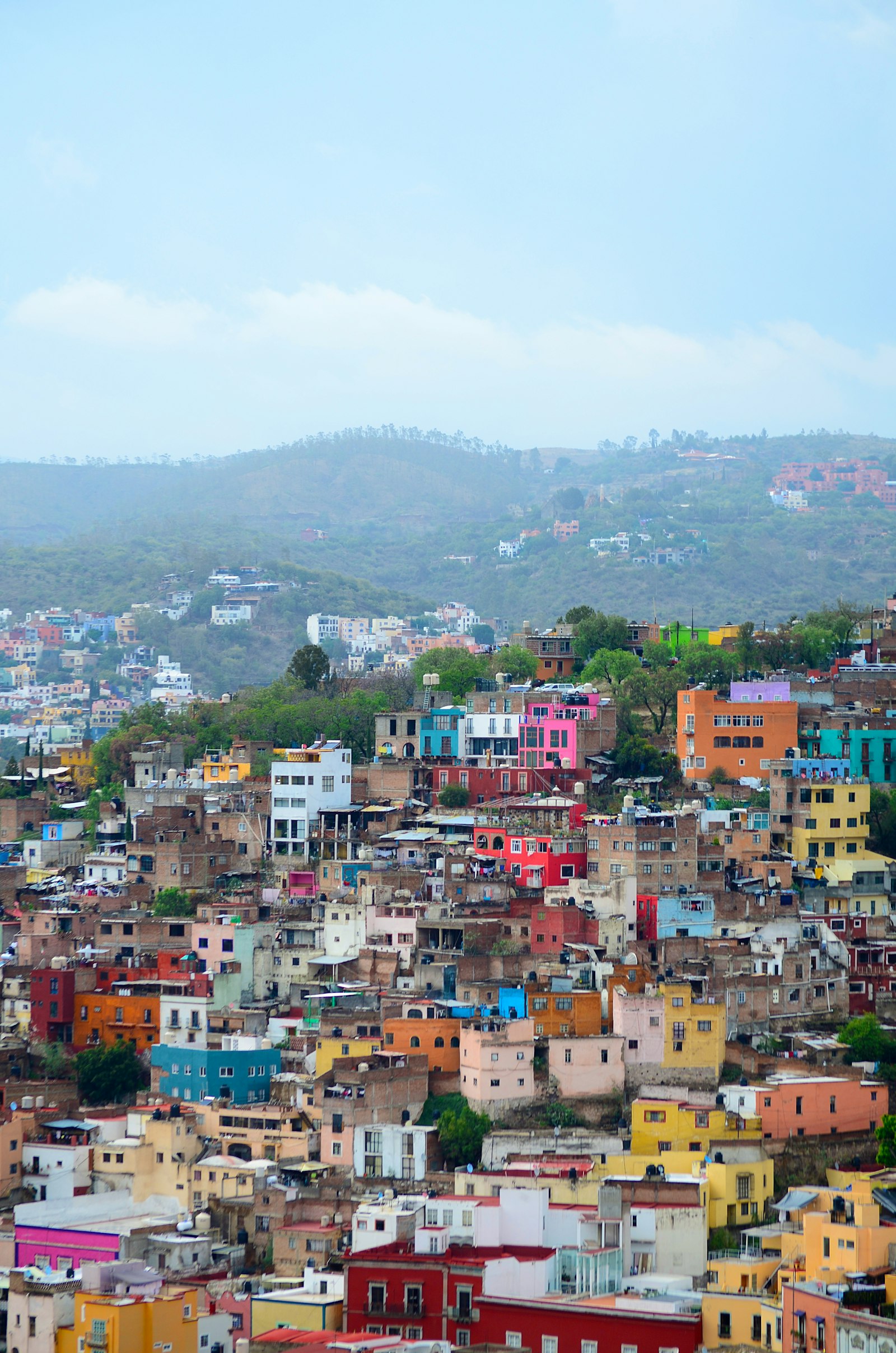
Now the atlas leaves Europe, and gets even more colourful. Guanajuato pours across a network of steep central-Mexican ravines in an explosion of colour, thousands of houses painted in every imaginable shade, stacked up the hillsides so densely that from above the whole city looks like a spilled box of crayons. Between them run impossibly narrow stepped alleys, the callejones, some so tight that legend says lovers can kiss from balconies on opposite sides.
Even stranger, much of the traffic runs underground, through a network of old tunnels and former riverbeds beneath the city, leaving the streets above free for pedestrians, buskers, and open-air cafés. A former silver-mining town turned university city, it hums with music, student energy, and festival colour, its plazas ringed by baroque churches and its funicular climbing to a hilltop view over the whole kaleidoscope.
Guanajuato is made for wandering on foot and looking up. Ride the funicular for the panorama, get happily lost in the callejones, and stay into the evening, when students with guitars lead singing crowds through the lanes in a centuries-old tradition and the painted city glows under the lamps.
12. Valparaíso, Chile
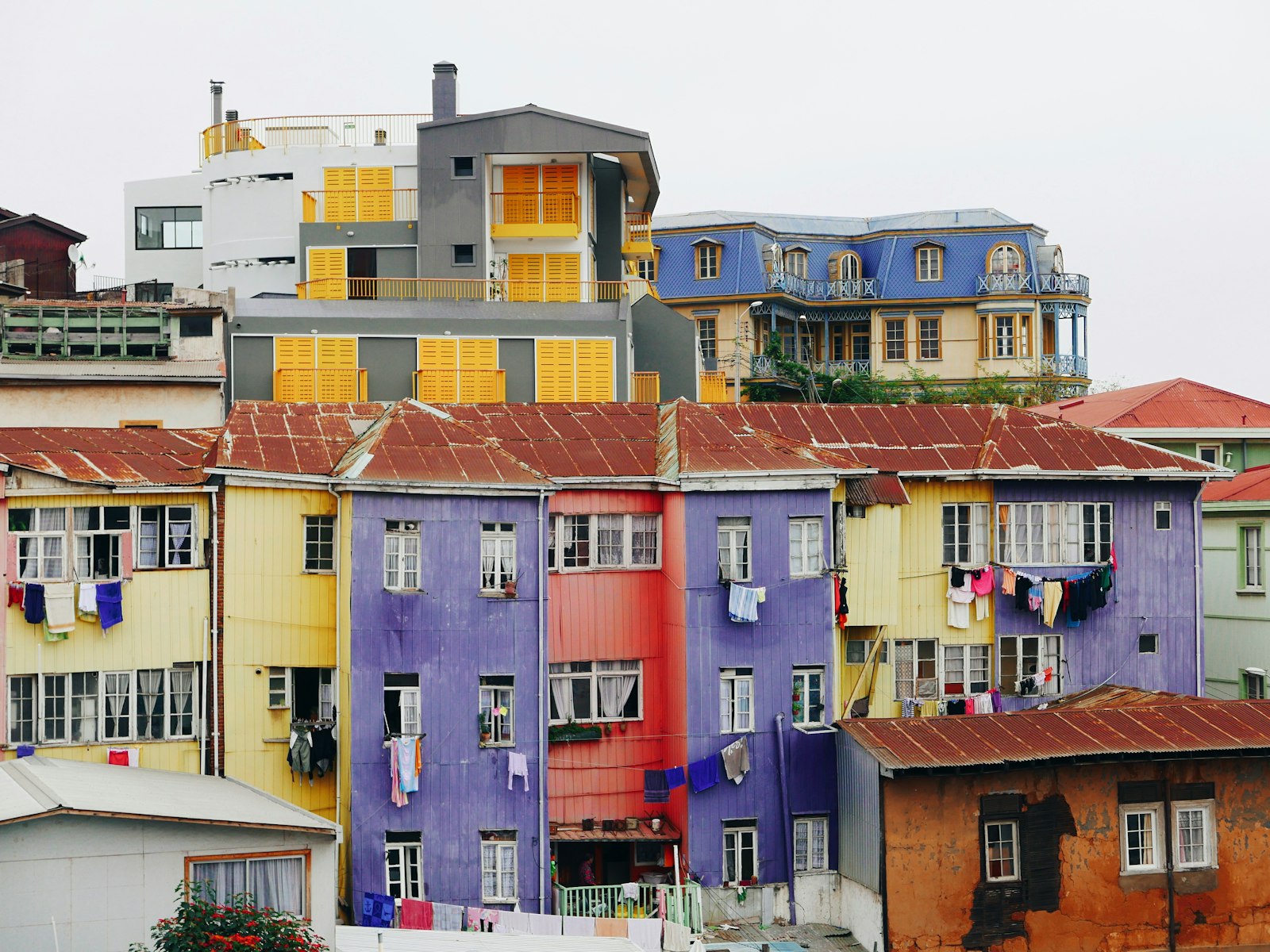
To end, the most gloriously chaotic city on this list. Valparaíso spills down a ring of steep hills to the Pacific in a tumbling patchwork of brightly painted houses, corrugated iron, and crooked stairways, every surface, it seems, given over to colour or to art. The city is one of the world's great open-air galleries, its walls, staircases, and alleys covered in vivid, ever-changing murals, so that a simple walk becomes a wander through a labyrinth of paint.
To climb the hills you ride the ascensores, a set of century-old wooden funiculars that clank up the slopes between the houses. At the top, bohemian lanes twist past cafés, poets' houses, and viewpoints over the harbour and the sea. Long a haven for sailors, poets, and artists, Valparaíso has a romantic, faded, slightly anarchic soul that gets under your skin.
This is a city to explore slowly, on foot and by funicular, and ideally with a local guide for the maze of hillside lanes. Ride an ascensor up Cerro Concepción or Cerro Alegre, follow the murals wherever they lead, and time your wandering for late afternoon, when the low sun sets the painted hills alight above the Pacific.
Where to start
If you can only chase one, let it be the one that surprises you: Valparaíso for its painted, poem-covered hills, Guanajuato for its crayon-box ravines, or Wrocław for the joy of hunting hidden dwarfs through a storybook square. And if you want the icons, catch Prague or Bruges at dawn, before the day's crowds turn the fairy tale into a queue.
The storybook feeling of these cities isn't only in the spires and the canals and the painted façades. It's in the moment a lane bends, or the mist lifts off the rooftops, and a whole city seems to arrange itself into a page from a book you half remember.
Keep wandering through the Whimsical Cities collection for more, or tell us the storybook city we missed. That's the fun of an atlas. It's never quite finished.
Keep exploring
The Most Whimsical Cities in Belgium
A storybook shortlist for a trip through Belgium, from the canals of Bruges to a town squeezed between a cliff and a river, and the tiny place that calls itself the smallest city in the world.
The Most Enchanting Castles in Belgium
Belgium hides a startling number of storybook castles, from a six-towered fairytale keep near Dinant to a moated brick fortress on the edge of Brussels.
The Most Enchanting Cafés & Beer Bars in Belgium
Belgium's real magic hides in its brown cafés and old beer bars, from a Bruges pub open since 1515 to a Brussels den where the surrealists once drank.